Historical figure · Notice Nearby
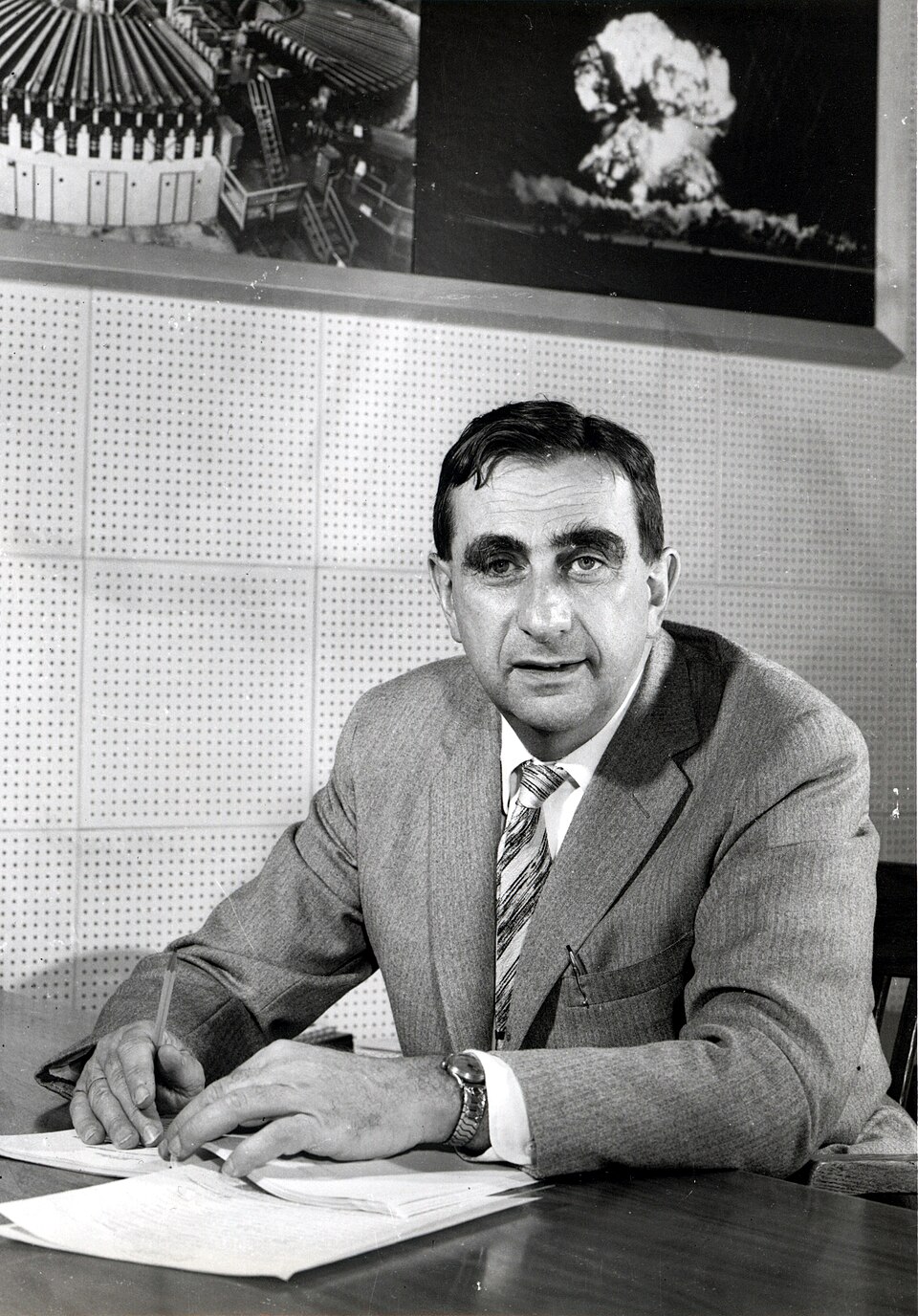
Edward Teller
January 15, 1908 – September 9, 2003
Stanford, California
Content hash on Base
Base stores the content hash, publication number, memorial id, and timestamp — not the full obituary text. The complete memorial remains on Notice Nearby. This is not a legal affidavit.
Edward Teller died in Stanford, California, on September 9, 2003. He was ninety-five. Born in Budapest on January 15, 1908, he left Europe as fascism closed in, took U.S. citizenship, and became one of the most consequential — and contested — physicists of the American century.
At Los Alamos he worked on the fission bomb while pressing, insistently, for a thermonuclear design. After the war his advocacy for the hydrogen bomb put him at odds with colleagues who wanted restraint; the 1954 Oppenheimer security hearing left friendships broken and Teller, for a time, isolated among peers even as policymakers leaned on his counsel. He helped shape Lawrence Livermore and spent decades arguing for missile defense, civil defense, and a hard line in the Cold War.
He was a gifted explainer and a stubborn political actor. Admirers saw a refugee who refused to gamble civilization on trust alone. Critics saw a man who mistook every technical possibility for a strategic necessity. Both readings have evidence. What is not in dispute is the scale of the forces he helped invent and the American institutions that absorbed him: labs, universities, and the Hoover Institution on the Stanford campus where he spent his late years.
Hungarian consonants and a bushy eyebrow became a public caricature. Behind them was a working scientist who kept publishing and arguing into old age. Stanford was the last address. The argument is unfinished.
Services
Died in Stanford, California, on September 9, 2003. A memorial was held at Hoover Institution / Stanford circles; ashes were handled privately.