Historical figure · Notice Nearby
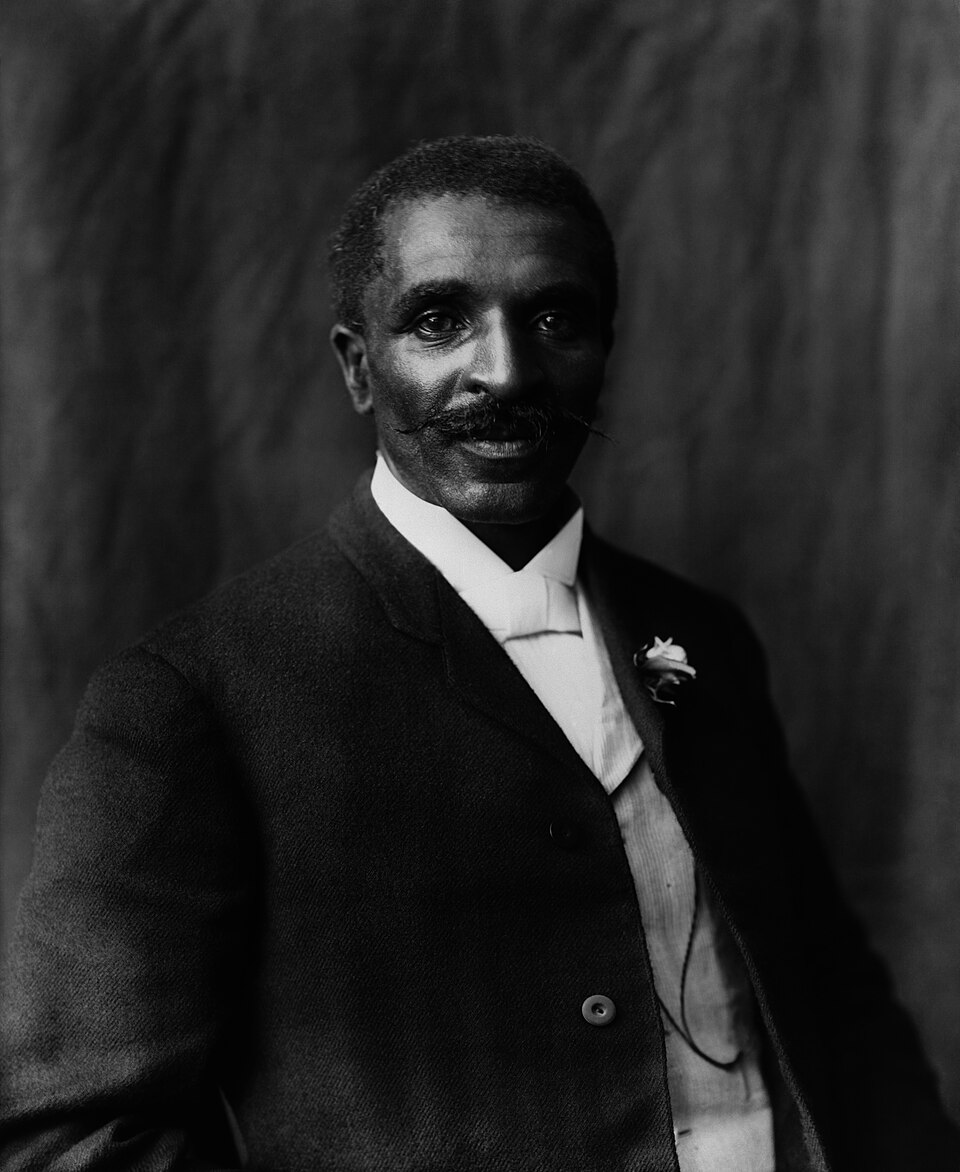
George Washington Carver
January 1, 1864 – January 5, 1943
Died: Tuskegee, Alabama
Interment: Tuskegee University campus, Tuskegee, Alabama
Content hash on Base
Base stores the content hash, publication number, memorial id, and timestamp — not the full obituary text. The complete memorial remains on Notice Nearby. This is not a legal affidavit.
George Washington Carver died at Tuskegee on January 5, 1943, after a fall on the stairs of the laboratory he had refused to leave. He was about seventy-eight. Born into slavery on a farm near Diamond, Missouri, around 1864, he was kidnapped as an infant, recovered in exchange for a horse, and raised by Moses and Susan Carver, who taught him that plants would answer a patient question.
He was the first Black student at Iowa State, then the first Black faculty member there, before Booker T. Washington called him south in 1896 to run agriculture at Tuskegee. He stayed forty-seven years. The Jesup wagon took soil science to the county roads. He taught crop rotation not as a slogan but as arithmetic: cotton had mined the land; peanuts, sweet potatoes, and cowpeas could put nitrogen back and feed a family that the market had priced out of meat.
He published bulletins on how to make flour, dye, board, and milk from what a tenant already grew. The popular story later turned him into a peanut magician; the work was poorer and more useful than that. He declined a salary increase more than once, wore the same old suit, and painted flowers in the evenings. Henry Ford sent cars. Carver sent seeds and letters in a small, careful hand. He never married, kept a museum of his own specimens, and asked that his savings endow research rather than a marble name.
He is buried on the Tuskegee campus, near Washington. The laboratory still smells faintly of earth. Diamond, Missouri, is a national monument to the birthplace, not the grave. Birth year about 1864.
Services
Died in Tuskegee, Alabama, on January 5, 1943. Interment on the Tuskegee University campus. Birth year about 1864.