Historical figure · Notice Nearby
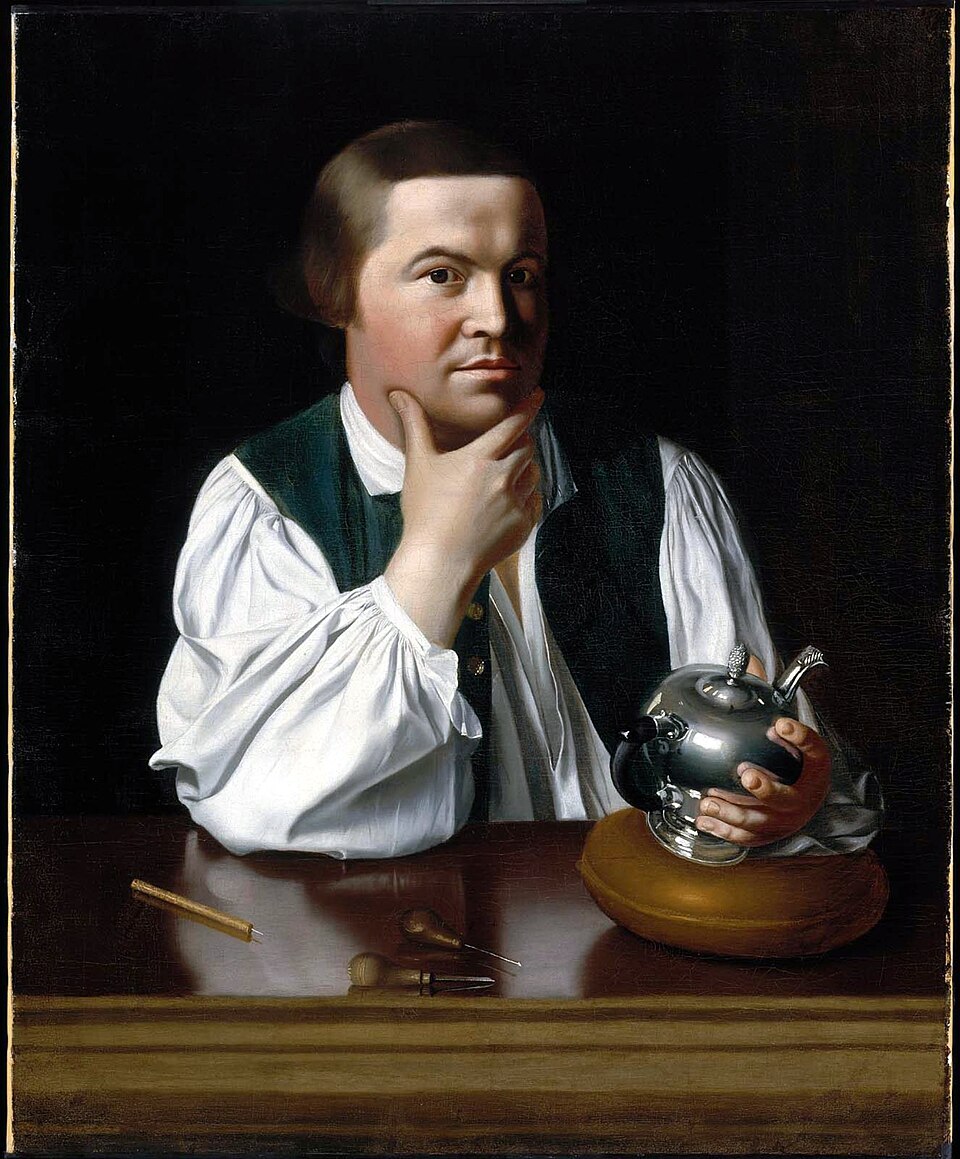
Paul Revere
December 21, 1734 – May 10, 1818
Boston, Massachusetts
Content hash on Base
Base stores the content hash, publication number, memorial id, and timestamp — not the full obituary text. The complete memorial remains on Notice Nearby. This is not a legal affidavit.
Paul Revere died in Boston on May 10, 1818. He was eighty-three. Born there on December 21, 1734 (January 1, 1735, in the New Style calendar), he was a silversmith, engraver, and midnight rider whose April 1775 alarm was only one night in a long trade of metal and politics. Longfellow later made the ride a poem that left out William Dawes, Samuel Prescott, and the capture. The real man went home and went back to work.
He cast church bells that still hang, rolled copper for the new Navy's ships, and kept a North End shop that made teapots as carefully as propaganda prints. The Boston Massacre engraving is not reportage; it is an argument in line. He was a Mason, a manufacturer, and a husband twice over, the second household filling with children who learned the trade.
Boston is the only city on this page. The Granary grave is a short walk from the house the city kept. Visitors still look for the rider and find, if they stay, the artisan. That is the better monument.
The midnight ride was a committee's night, not a solo. He was captured and released and still got the warning through by other boots. The North End house keeps silver and a story the poem overfed. The Granary stone is older than the fame and calmer than the engraving. He rolled copper because a navy needs sheathing more than it needs another legend. The Granary stone is a craftsman's ending. Longfellow can keep the gallop. Boston can keep the shop.
Services
Died in Boston on May 10, 1818. Interment at the Granary Burying Ground, Boston.