Historical figure · Notice Nearby
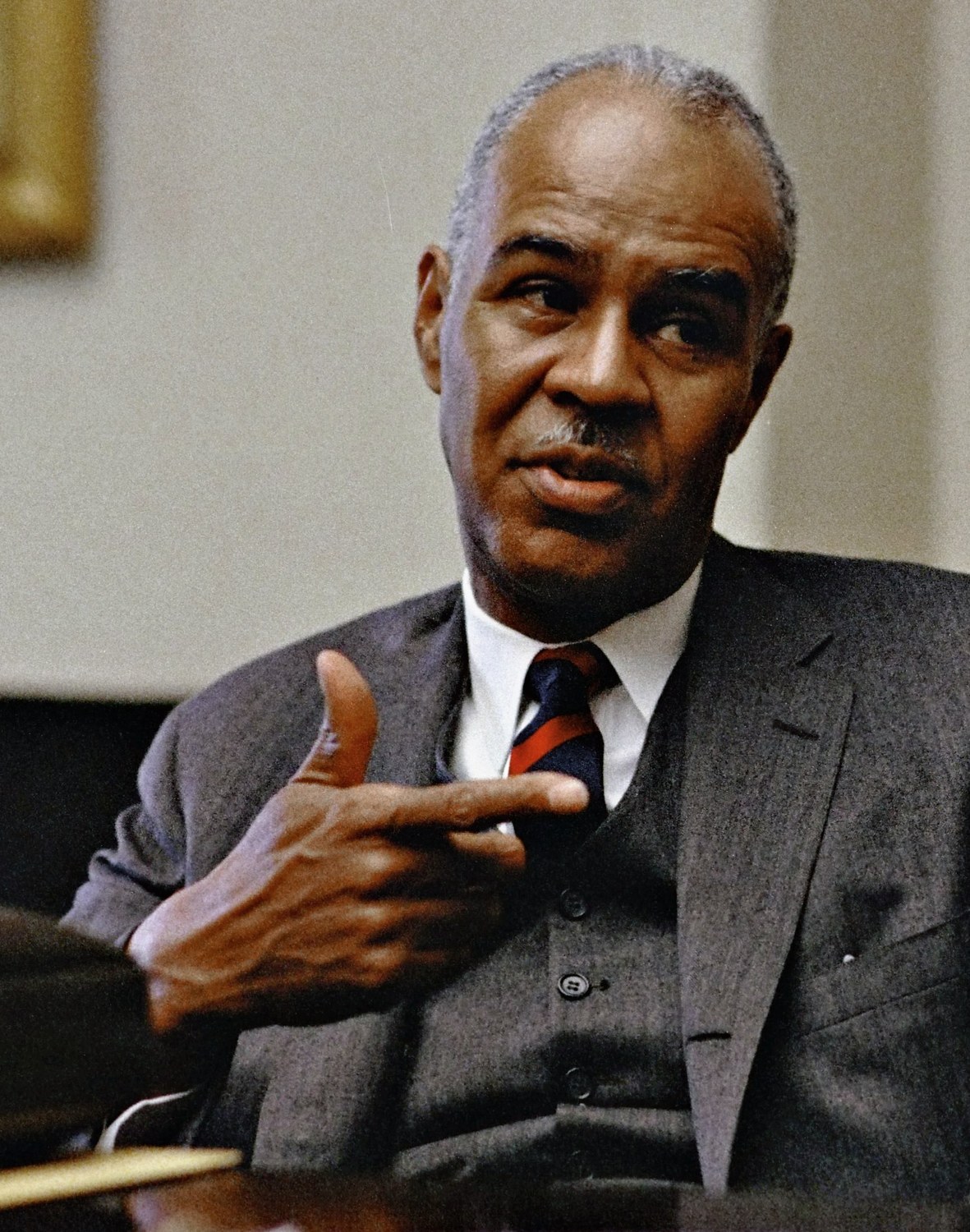
Roy Ottoway Wilkins
August 30, 1901 – September 8, 1981
Died: New York, New York
Content hash on Base
Base stores the content hash, publication number, memorial id, and timestamp — not the full obituary text. The complete memorial remains on Notice Nearby. This is not a legal affidavit.
Roy Ottoway Wilkins died in New York City on September 8, 1981. A heart that had already accepted a pacemaker gave out. He was eighty. Born in St. Louis on August 30, 1901, he lost his mother to tuberculosis at four and was raised by an aunt and uncle in the Rondo neighborhood of St. Paul, Minnesota. Mechanic Arts High School and the University of Minnesota taught him a reporter's sentence. The Call in Kansas City and then The Crisis in New York taught him what a sentence could do when a lynching or a statute needed naming.
He joined the NAACP staff under Walter White in 1931 and never really left. Executive secretary, then executive director, he held the national office from 1955 until 1977 — the years of Brown's aftermath, the Civil Rights Act, the Voting Rights Act, the March on Washington, Selma, and the argument with younger activists who wanted more heat than a lobbyist could carry. He believed in lawsuits, hearings, and a coalition that included people who would never march. He was called Mr. Civil Rights by men who meant it as praise and Uncle Tom by men who meant it as a verdict. He answered both with the same clipped patience. He helped found the Leadership Conference on Civil Rights. He took the Spingarn Medal and, from Lyndon Johnson, the Medal of Freedom.
He married Aminda Badeau. They had no children of their own and raised two who needed a house. St. Paul kept an auditorium in his name. Queens kept a park. New York was the office and the death. St. Louis was the birth he barely remembered.
Standing Fast, his autobiography, came out the year after he died. The book is drier than the marches. So was he.
Services
Died in New York City on September 8, 1981. Longtime executive director of the NAACP. Autobiography, Standing Fast, published posthumously in 1982.