Historical figure · Notice Nearby
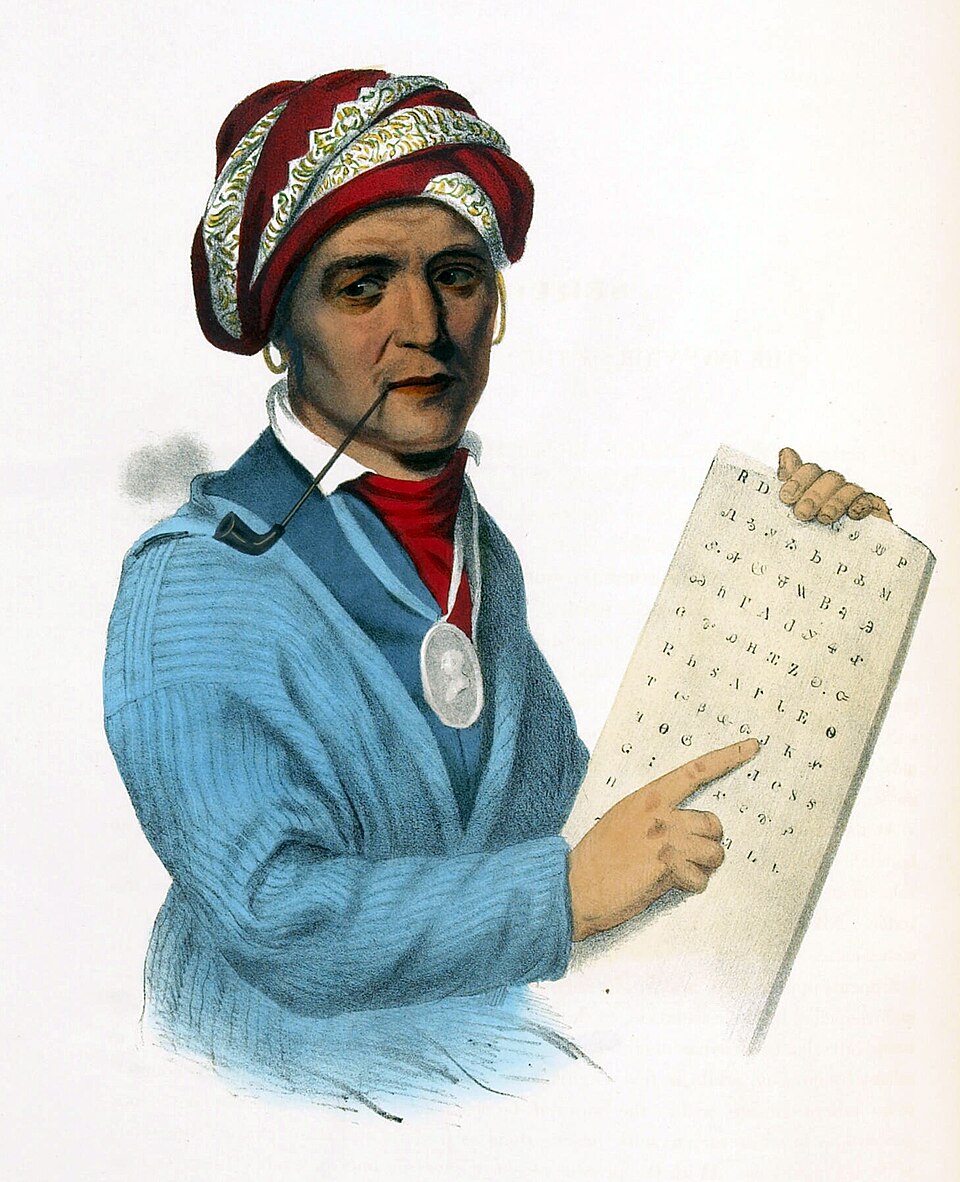
Sequoyah
January 1, 1770 – August 1, 1843
Died: Near Zaragoza, Mexico
Interment: Traditional grave near Zaragoza, Mexico
Content hash on Base
Base stores the content hash, publication number, memorial id, and timestamp — not the full obituary text. The complete memorial remains on Notice Nearby. This is not a legal affidavit.
Sequoyah died in August 1843, most accounts say, near Zaragoza in Coahuila, while looking for a band of Cherokee who had gone south. He was about seventy-three. Born around 1770 in the Overhill towns of what is now eastern Tennessee — Tuskegee, near present-day Vonore — he was also called George Gist or Guess, a silversmith and veteran of the Creek War who had no English schooling and no interest in borrowing someone else's alphabet.
Between about 1809 and 1821 he invented the Cherokee syllabary: eighty-five characters that mapped the language's syllables so a speaker could read in days, not years. The nation tested it, adopted it, and in 1828 printed the Cherokee Phoenix in that script. Missionaries who had spent careers on orthographies found themselves behind a man who had worked with a whittling knife and a stubborn ear. He never claimed the invention would save the people from removal. It did give them a press in their own tongue before the Trail of Tears. He later served as an envoy among western Cherokee towns, still carrying the characters that had outrun the treaties.
Vonore is the association this page keeps: the birth country of the Overhill towns, the Sequoyah Birthplace Museum, the Little Tennessee. It is not the place he died. The Mexican grave has been reported, disputed, and marked in the way of a frontier death — a cairn, a tradition, a later plaque.
Birth year about 1770; death month given as August 1843. This memorial does not pretend the file is tidier than that.
Services
Died near Zaragoza, Mexico, in August 1843. Traditional interment nearby. Vonore, Tennessee, is the Overhill birthplace association, not the place of death. Birth year about 1770.