Historical figure · Notice Nearby
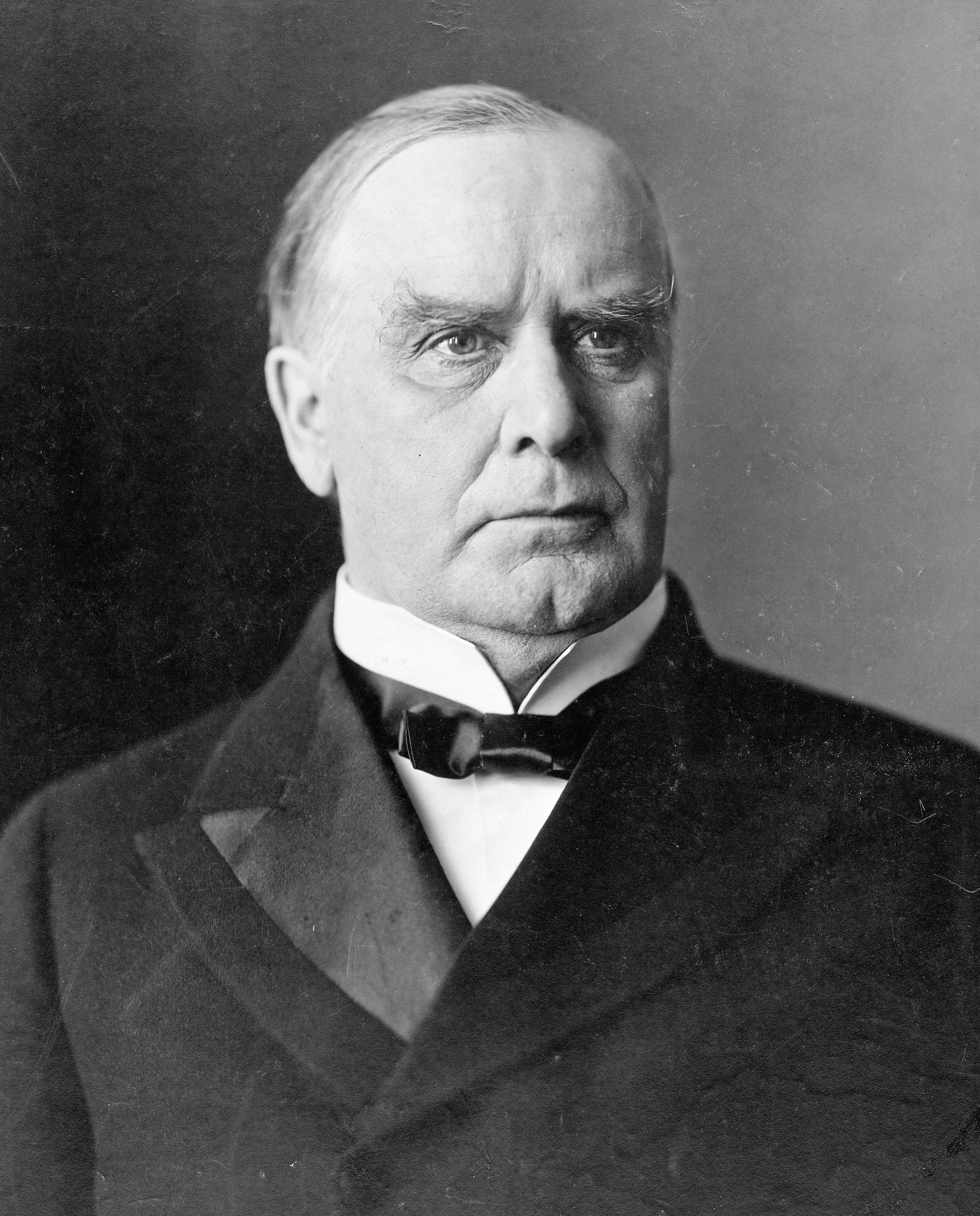
William McKinley
January 29, 1843 – September 14, 1901
Buffalo, New York
Content hash on Base
Base stores the content hash, publication number, memorial id, and timestamp — not the full obituary text. The complete memorial remains on Notice Nearby. This is not a legal affidavit.
William McKinley, the twenty-fifth President of the United States, died at the home of John G. Milburn on Delaware Avenue in Buffalo, New York, in the early morning of September 14, 1901. He was fifty-eight. Eight days earlier, at the Temple of Music on the grounds of the Pan-American Exposition, Leon Czolgosz had fired two shots into the receiving line; one bullet glanced from a button, the other lodged where surgeons could not safely retrieve it. Gangrene followed. At about 2:15 a.m. the president who had preferred calm handshakes to cordons of guards was gone.
Born in Niles, Ohio, on January 29, 1843, McKinley rose through Civil War service, the Ohio bar, Congress, and the governorship into a White House that spoke the language of tariffs, gold, and a newly outward American power. The Spanish–American War, the annexation debates, and the 1900 reelection against William Jennings Bryan fixed his name to an age that still argued whether empire was destiny or temptation. He was not a theatrical president; colleagues remembered courtesy, Methodist habit, and a politician’s gift for making hard votes feel like duty rather than drama.
Ida Saxton McKinley’s fragile health shaped the private White House as much as any cabinet fight. In Buffalo she kept vigil while the city that had staged a world’s fair watched bulletins turn from hope to mourning. Theodore Roosevelt took the oath that afternoon at the Ansley Wilcox house — a succession that remade the century’s first decade before McKinley’s body had reached Canton for burial.
He died in Buffalo on September 14, 1901. The exposition lights went dim; the Secret Service’s presidential protection mission grew teeth that later generations would take for granted.
McKinley’s quieter legacy is the ordinary civic faith he carried from Stark County into national politics: that prosperity could be argued without contempt, and that a president’s handshake was part of the job. Assassination made him a martyr of that faith. Notice Nearby records the death date so September 14 keeps the Ohioan beside the louder calendars of war and film that share the day.
Services
Died at the Milburn house, Buffalo, New York, September 14, 1901, of gangrene following gunshot wounds at the Pan-American Exposition. Twenty-fifth President of the United States; interred at the McKinley National Memorial, Canton, Ohio.