American War Hero · Mexican–American War · Notice Nearby
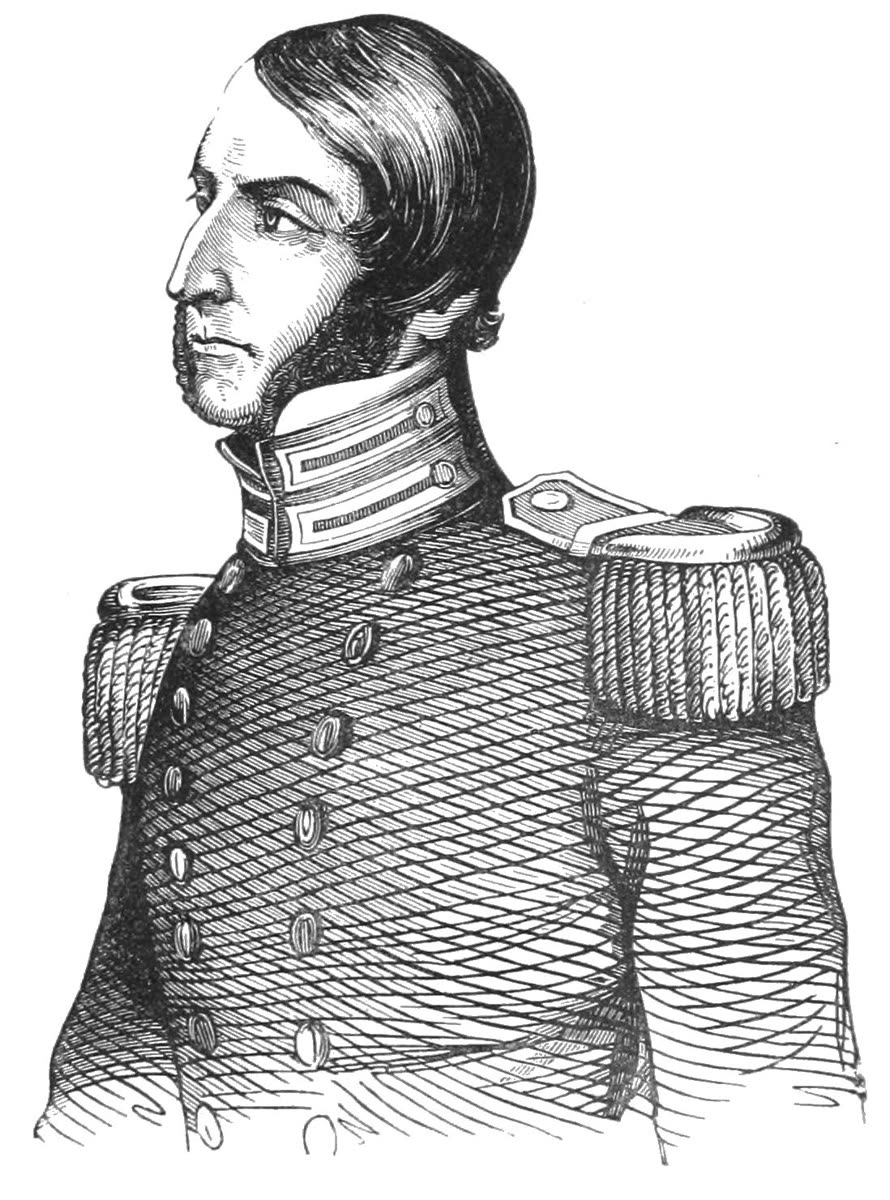
Samuel Ringgold
1796 (some later notices say 1800) – May 11, 1846
Born Near Hagerstown, Maryland
Died Port Isabel, Texas
Brevet major, Company C, 3rd Artillery; flying artillery at Palo Alto, May 8, 1846
Samuel Ringgold was the first American officer the Mexican–American War killed, and the country made a song of it before the army had finished burying him. He was a Maryland artilleryman, West Point class of 1818, who spent the quiet years teaching batteries to move. Light guns, horse teams, cannoneers who rode: flying artillery. Company C of the 3rd Artillery was the first mounted as a true horse battery. The tactic was a drill-ground idea until May 8, 1846.
That afternoon, on the prairie of Palo Alto, Zachary Taylor found Mariano Arista already deployed and too wide for a cheap bayonet solution. Taylor put the guns forward. Ringgold's battery shifted, fired, and shifted again when Mexican cavalry tried the flanks. The heavier Mexican pieces were slower in the thorn. The American eighteen-pounders and the horse guns decided the meeting. A Mexican round tore both of Ringgold's thighs. He waved the crews back to the pieces. He lived three days, long enough to talk the fight through, and died at Port Isabel on May 11.
The Library of Congress authority file keeps 1796–1846. Some later notices, including a National Park Service sketch, give 1800. This page will not pretend a year the documents still argue. Hagerstown is the place. Green Mount Cemetery in Baltimore is the grave, after a first burial at the Texas post and a December 1846 reinterment.
He was the eldest son of another Samuel Ringgold, a War of 1812 brigadier. The younger man did not live to see Monterrey or the city Scott took. The Medal of Honor did not exist for the army in 1846, and this register will not invent one to thicken a first-casualty story. The documentation is a battery that moved, a wound on a prairie, and a name the newspapers of that summer already knew how to spell.
The lithograph on this page is a period likeness, not a photograph from the gun line. The after-action is the record.
- Publication
- NN-HERO-1846-004
- Content hash
- 4f2a6df4 77b3a8ad d1ec5349 73cb858f 76a0aad0 676c4f4a 6c80521b 64519589
- Base anchor
- 0x72d9aa 14db2d5c 210cbd0e 10b41937 e829dfbc 35a0042c 0f0ab583 12a3b49b e7
Base stores the content hash, publication number, memorial id, and timestamp — not the full obituary text. The complete memorial remains on Notice Nearby. This is not a legal affidavit.