American War Hero · Spanish–American War · Notice Nearby
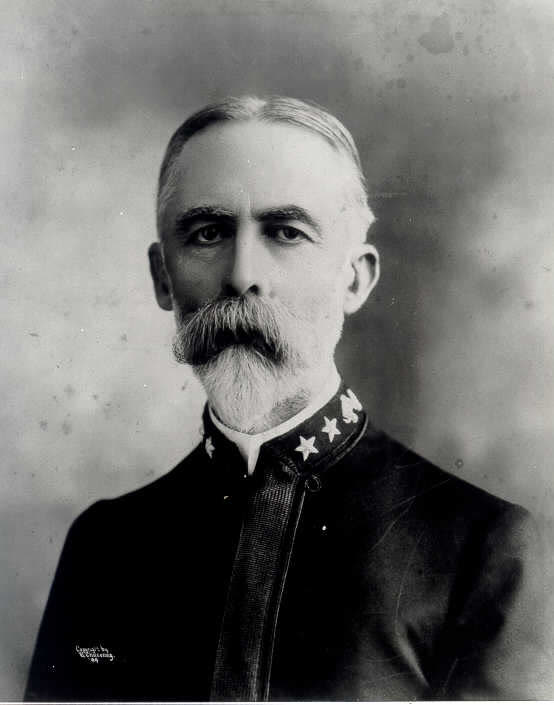
William T. Sampson
February 9, 1840 – May 6, 1902
Born Palmyra, New York
Died Washington, D.C.
Rear admiral, North Atlantic Squadron; blockade of Santiago and the destruction of Cervera's squadron, 1898
William Thomas Sampson commanded the North Atlantic Squadron that locked Cervera into Santiago and then missed the hour the Spanish came out. He was ashore on July 3, 1898, conferring with General Shafter, when the Spanish squadron sortied. Winfield Scott Schley was the senior officer present in the offing. The American ships wrecked Cervera's in a running fight west of the harbor. Sampson arrived as the work was ending. The country then spent years arguing whose name belonged on the victory.
This page will not settle a controversy the Navy already litigated. The blockade was Sampson's. The standing orders were Sampson's. The shooting on July 3 was done by the captains who were there. The Sampson–Schley dispute is a public record of testimony, newspapers, and hurt rank. A memorial that picks a winner is doing politics.
He was born in Palmyra, New York, on February 9, 1840, Annapolis 1861, a Civil War officer who had already survived the sinking of Patapsco. In 1898 he also ran the blockade of Cuba and the bombardment of San Juan. The West Indies campaign medal that bears his portrait — the Sampson Medal — is a documented decoration, not a Medal of Honor, and this register will not confuse them.
He died of a cerebral hemorrhage in Washington on May 6, 1902, and is buried at Arlington. The war page is a rear admiral who built a cage around a harbor and then had to watch other men shoot the animals that left it. That is not a humiliation invented later. It is the geography of July 3. The fleet still did the job the blockade was for.
- Publication
- NN-HERO-1898-004
- Content hash
- a7771454 199bf290 5b6c5e34 b9558b04 54f3c54c 6ad117eb 3e79e02e 90809901
- Base anchor
- 0x44cb6f 168d0d40 510e409d 1d4253b5 b28d6b44 35a3b227 fe37ef07 f8b7e872 2b
Base stores the content hash, publication number, memorial id, and timestamp — not the full obituary text. The complete memorial remains on Notice Nearby. This is not a legal affidavit.