Historical figure · Notice Nearby
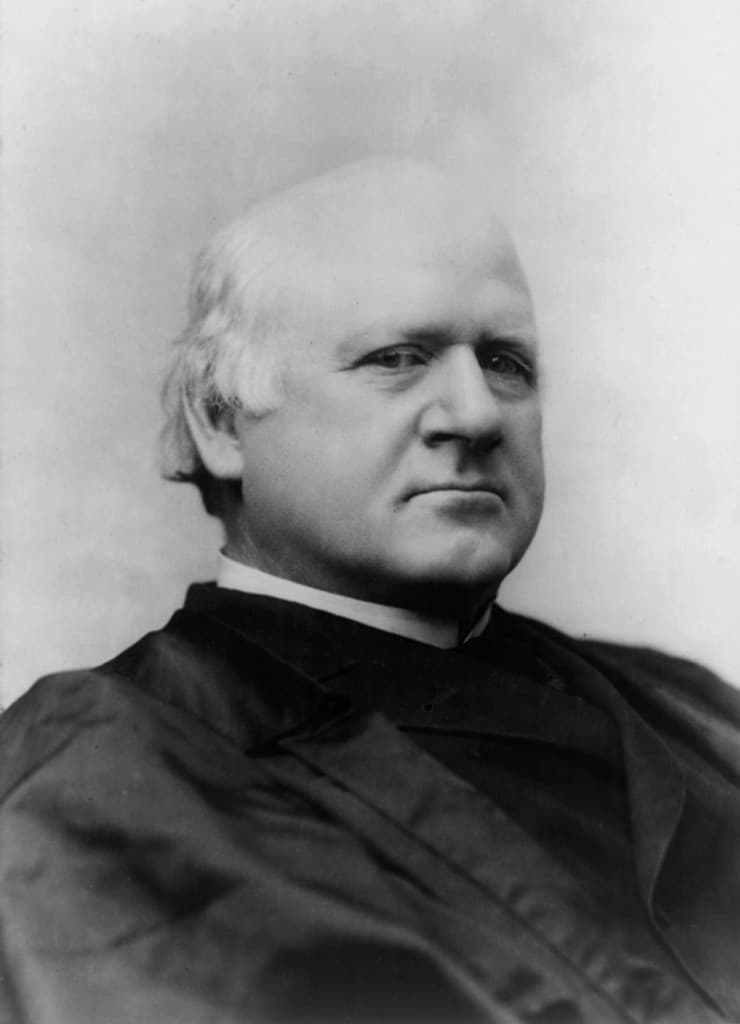
John Marshall Harlan
June 1, 1833 – October 14, 1911
Washington, District of Columbia
Content hash on Base
Base stores the content hash, publication number, memorial id, and timestamp — not the full obituary text. The complete memorial remains on Notice Nearby. This is not a legal affidavit.
John Marshall Harlan, the Kentucky lawyer who became the Supreme Court's great dissenter of the late nineteenth century and whose lone voice in Plessy v. Ferguson later helped undercut Jim Crow, died in Washington, D.C., on October 14, 1911. He was seventy-eight.
He was born on June 1, 1833, in Boyle County, Kentucky, into a family steeped in law and politics. His father, James Harlan, served in Congress and as Kentucky's attorney general. Young Harlan graduated from Centre College in 1850, studied law in his father's office and at Transylvania University, and was admitted to the bar in 1853. He served as county judge in Franklin County, as adjutant general of Kentucky, and briefly as attorney general of the state.
When the Civil War came he raised the 10th Kentucky Infantry for the Union, even though he had earlier been a slaveholder and had opposed Lincoln in 1860. After the war he broke with the Democratic Party over Reconstruction, joined the Republicans, and in 1877 President Rutherford B. Hayes named him to the Supreme Court. The Senate confirmed him, and he took his seat that December.
On the Court he wrote more than 1,100 opinions over nearly thirty-four years and dissented often when the majority narrowed the Reconstruction Amendments. In the Civil Rights Cases of 1883 he alone argued that Congress could ban racial discrimination in public accommodations. In 1896, in Plessy v. Ferguson, he was again the sole dissenter, insisting that "our Constitution is color-blind" and that separate-but-equal railroad cars violated the Fourteenth Amendment. That dissent, long ignored by majorities, became a cornerstone of the civil-rights jurisprudence of the mid-twentieth century.
He also wrote the Court's opinion in United States v. E. C. Knight Co. (1895) limiting the Sherman Act, and he pressed for a broad reading of federal power to tax and regulate commerce. His grandson, also named John Marshall Harlan, would later sit on the same Court. He is buried in Rock Creek Cemetery in Washington.
Services
Died in Washington, DC, October 14, 1911, aged 78. Portrait: Photograph by Napoléon Sarony, c. 1890 (public domain), hosted by Notice Nearby.