Historical figure · Notice Nearby
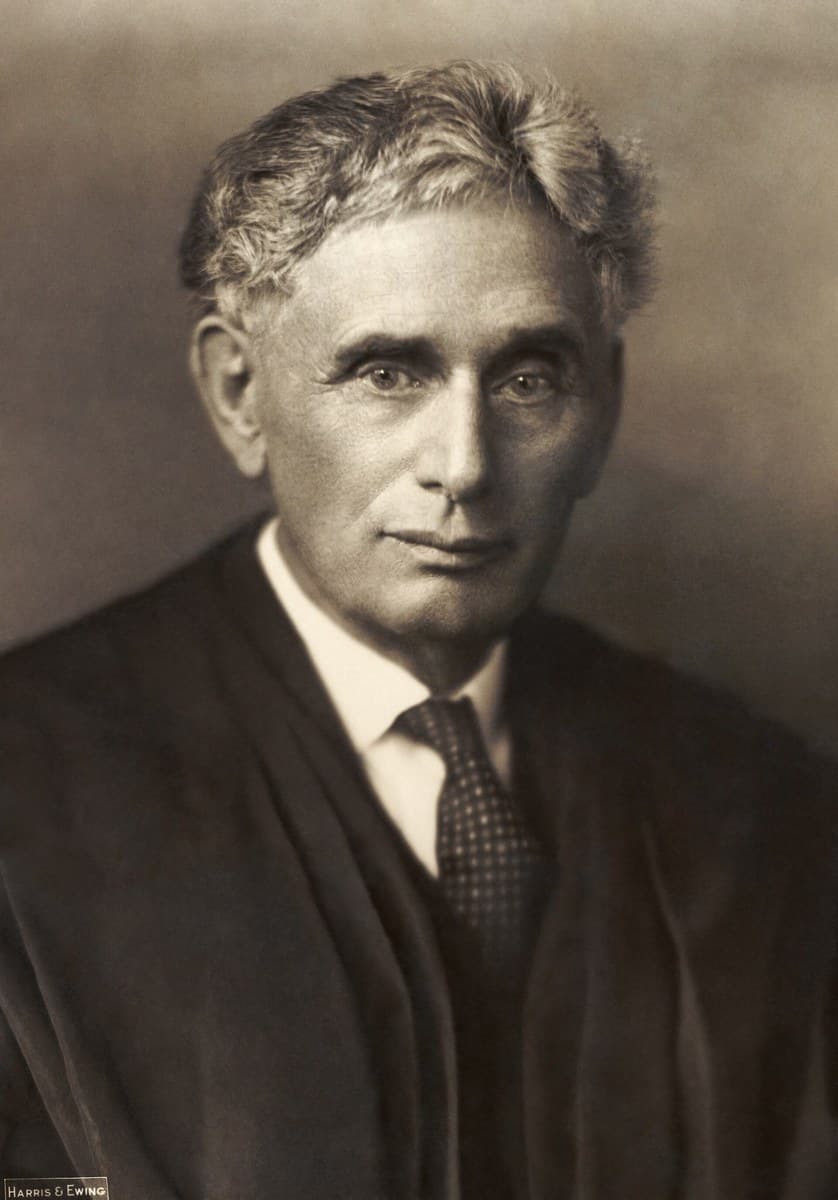
Louis Dembitz Brandeis
November 13, 1856 – October 5, 1941
Washington, District of Columbia
Louis Dembitz Brandeis, the "people's lawyer" who carried his arguments onto the Supreme Court and left behind the American idea of a right to be let alone, died of a heart attack at his home in Washington on October 5, 1941. He was eighty-four and had retired from the Court two and a half years earlier.
He was born in Louisville, Kentucky, on November 13, 1856, the son of Jewish immigrants from Bohemia who had come to America after the failed revolutions of 1848. He entered Harvard Law School without a college degree and finished with a record that was talked about for decades.
In Boston he built a prosperous practice, then spent much of his time on public causes without taking a fee. With his law partner Samuel Warren he wrote "The Right to Privacy" for the Harvard Law Review in 1890, an essay still cited by courts. He pushed Massachusetts to create savings-bank life insurance so working families could buy honest policies. Defending an Oregon limit on women's working hours in Muller v. Oregon in 1908, he filed a brief with only a few pages of legal argument and more than a hundred pages of facts about fatigue, health and wages, gathered with his sister-in-law Josephine Goldmark. The "Brandeis brief" became a standard tool of American advocacy.
His 1914 book, Other People's Money, attacked the concentration of banking power and gave the country a line it still repeats: sunlight is said to be the best of disinfectants.
President Woodrow Wilson nominated him to the Supreme Court in January 1916. After four bitter months of hearings, colored by open antisemitism, the Senate confirmed him on June 1. On the bench he often wrote in dissent, and many of those dissents later became law. In Olmstead v. United States he warned against government wiretaps; in Whitney v. California he wrote that the remedy for bad speech is more speech, not enforced silence; and he described the states as laboratories of democracy.
Notice Nearby remembers the Louisville son who argued that facts belong in a courtroom and privacy belongs to every citizen.
Services
Died at his Washington, D.C., home, October 5, 1941. Associate Justice of the U.S. Supreme Court, 1916-1939; first Jewish justice. Ashes interred at the University of Louisville law school that bears his name. Portrait: Harris & Ewing photograph (public domain), hosted by Notice Nearby.