Historical figure · Notice Nearby
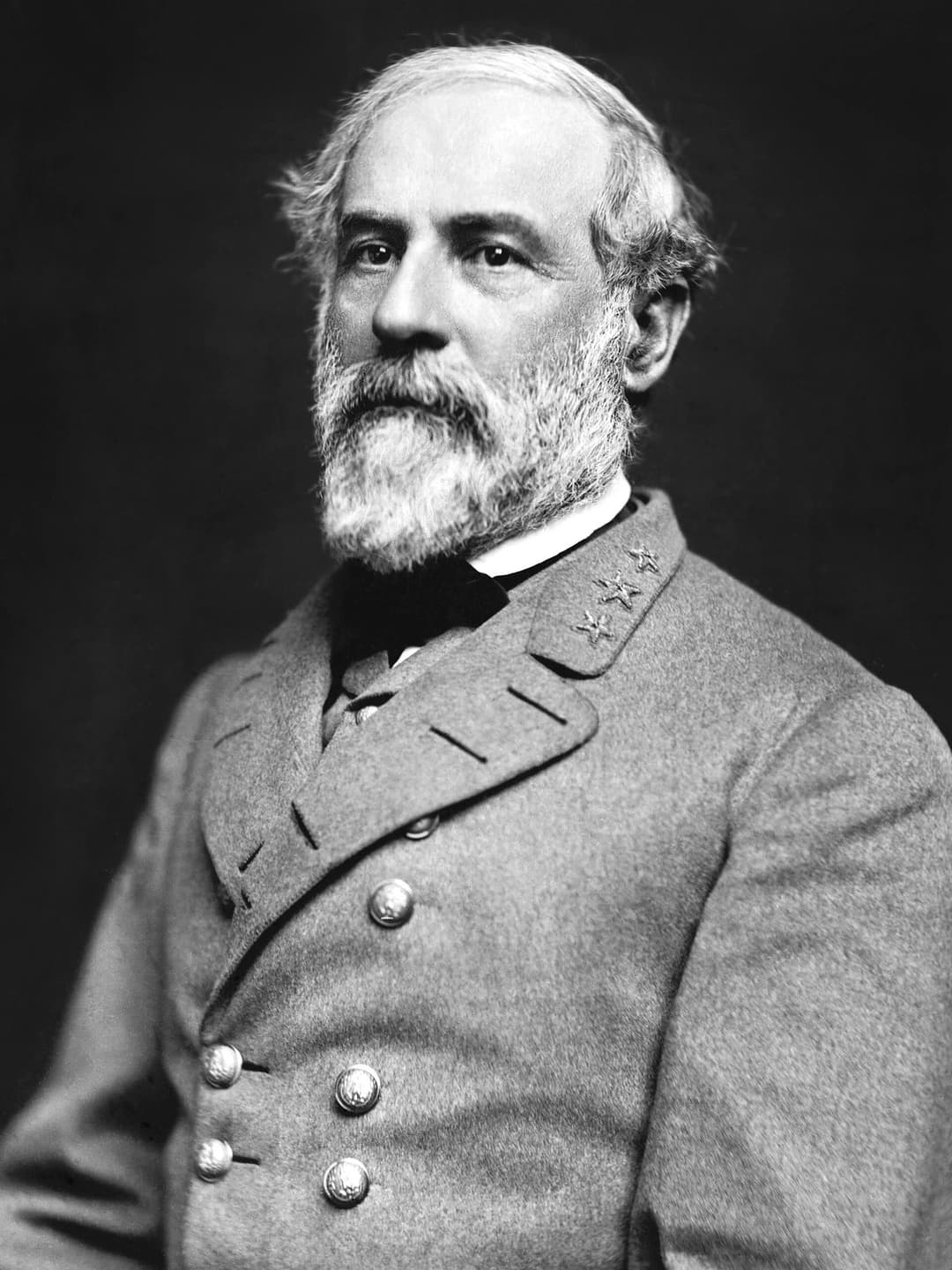
Robert E. Lee
January 19, 1807 – October 12, 1870
Lexington, Virginia
Content hash on Base
Base stores the content hash, publication number, memorial id, and timestamp — not the full obituary text. The complete memorial remains on Notice Nearby. This is not a legal affidavit.
Robert Edward Lee, the Confederate general who commanded the Army of Northern Virginia through the hardest fighting of the Civil War and later rebuilt a small Virginia college into a lasting institution, died at his home in Lexington, Virginia, on October 12, 1870. He was sixty-three.
He was born on January 19, 1807, at Stratford Hall in Westmoreland County, the son of Revolutionary War cavalryman Henry "Light-Horse Harry" Lee and Ann Hill Carter. Graduating second in his class at West Point in 1829 without a single demerit, he spent more than thirty years as an engineer and officer in the United States Army, distinguishing himself in the Mexican-American War under Winfield Scott and serving as superintendent of West Point.
When Virginia seceded in 1861 he declined command of Union forces and resigned his commission. After a year as a military adviser to Jefferson Davis he took over the Army of Northern Virginia in June 1862. He drove McClellan from the Peninsula, won at Second Manassas and Chancellorsville, and twice invaded the North, failing at Antietam and Gettysburg. On April 9, 1865, he surrendered to Ulysses S. Grant at Appomattox Court House.
Refusing lucrative offers to trade on his name, he accepted the presidency of struggling Washington College in Lexington. Enrollment rose, the curriculum broadened, and he pressed students toward reconciliation rather than bitterness. A stroke in late September left him lingering for two weeks. After his death the college was renamed Washington and Lee. He was buried in the chapel he had helped build on the campus.
Services
Died in Lexington, VA, October 12, 1870, aged 63. Portrait: Photograph attributed to Julian Vannerson, c. 1864 (public domain), hosted by Notice Nearby.