Historical figure · Notice Nearby
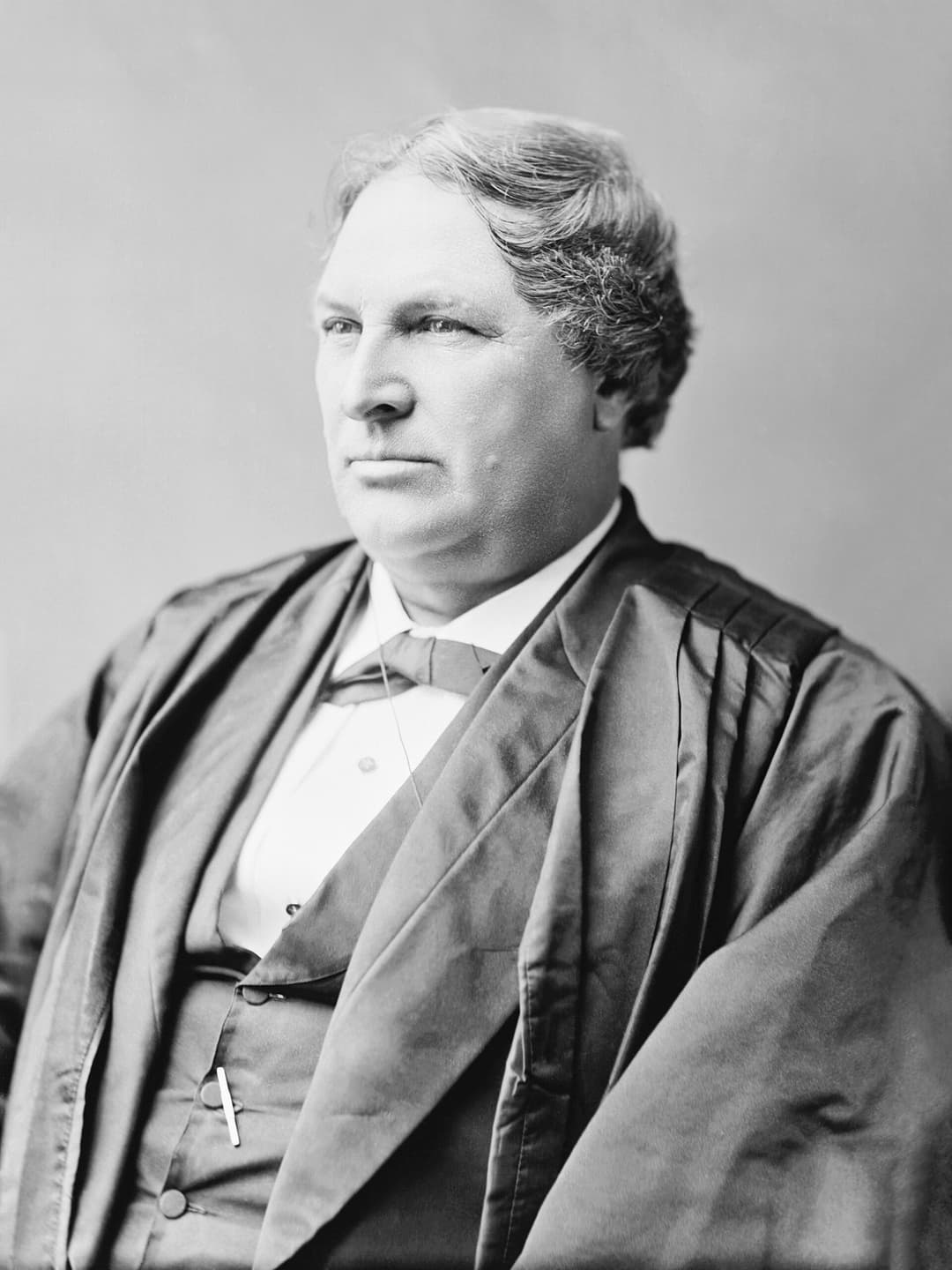
Samuel Freeman Miller
April 5, 1816 – October 13, 1890
Washington, District of Columbia
Content hash on Base
Base stores the content hash, publication number, memorial id, and timestamp — not the full obituary text. The complete memorial remains on Notice Nearby. This is not a legal affidavit.
Samuel Freeman Miller, a Kentucky country doctor who taught himself law and became one of the most prolific justices ever to sit on the Supreme Court of the United States, died in Washington, D.C., on October 13, 1890, while still a member of the Court. He was seventy-four.
He was born on April 5, 1816, in Richmond, Kentucky, the son of Frederick Miller, a farmer, and his wife, Patsy. He earned a medical degree from Transylvania University in Lexington in 1838 and practiced medicine for about ten years in Barbourville, Kentucky. Between patients he studied law on his own, and he was admitted to the bar in 1847. An opponent of slavery living in a slave state, he moved his family in 1850 to Keokuk, Iowa, and at once freed the few enslaved people who had come with the household from Kentucky.
In Iowa he threw himself into politics and supported Abraham Lincoln in 1860. Lincoln nominated him to the Supreme Court on July 16, 1862. The Senate confirmed him that same day, and he was sworn in on July 21. During the Civil War his votes generally upheld the administration's wartime measures. Afterward he wrote the majority opinion in the Slaughter-House Cases of 1873, a narrow reading of the Fourteenth Amendment that shaped constitutional law for generations. In Ex parte Yarbrough in 1884, he held that the federal government had broad power to protect Black voters from violence by the Ku Klux Klan and other private groups.
Over twenty-eight years on the bench he wrote 616 opinions, more than Chief Justice John Marshall wrote in thirty-three. When Chief Justice Salmon P. Chase died in 1873, lawyers and law journals across the country urged that Miller succeed him, but President Ulysses S. Grant chose Morrison Waite. Miller later sat on the electoral commission that awarded the disputed electoral votes of 1876 to Rutherford B. Hayes.
A religious liberal, he served as president of the Unitarians' National Conference. In the winter and spring before his death he delivered ten lectures on constitutional law at the National University School of Law in Washington, and they were published after he died. His funeral was held at the First Unitarian Church of Keokuk, a congregation he had helped found, and he was buried in Oakland Cemetery in Keokuk.
Services
Died in Washington, DC, October 13, 1890, aged 74. Portrait: Photograph by Mathew Brady / Levin C. Handy studio (Brady-Handy Collection, Library of Congress; public domain), hosted by Notice Nearby.