Historical figure · Notice Nearby
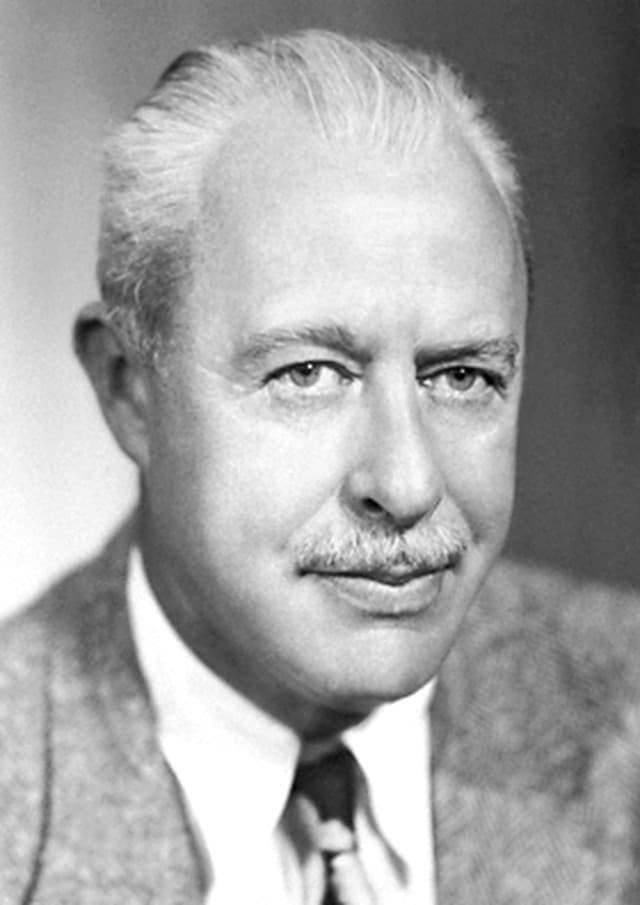
Walter H. Brattain
February 10, 1902 – October 13, 1987
Seattle, Washington
Content hash on Base
Base stores the content hash, publication number, memorial id, and timestamp — not the full obituary text. The complete memorial remains on Notice Nearby. This is not a legal affidavit.
Walter Houser Brattain, the experimental physicist whose patient bench work at Bell Telephone Laboratories helped produce the first working transistor, died of Alzheimer's disease in Seattle on October 13, 1987. He was eighty-five.
He was born on February 10, 1902, in Amoy, China (now Xiamen), where his father, Ross R. Brattain, taught at a private school for Chinese boys. His mother, Ottilie Houser Brattain, was a gifted mathematician, and both parents were graduates of Whitman College. The family returned to the United States in 1903, lived for several years in Spokane, and in 1911 settled on a cattle ranch near Tonasket, Washington. He graduated from Whitman in 1924 with a double major in physics and mathematics, earned a master's degree at the University of Oregon in 1926 and a doctorate at the University of Minnesota in 1929.
After a stint at the National Bureau of Standards developing piezoelectric frequency standards, he joined Bell Labs in August 1929. His studies of semiconductor surfaces led him to discover the photo-effect at the free surface of a semiconductor, work the Nobel Committee later counted among his chief contributions. During World War II he worked on magnetic detection of submarines, and in 1944 he patented a design for a magnetometer head.
After the war Bell Labs formed a solid-state physics group, and Brattain was paired with the theorist John Bardeen, a friend he played bridge and golf with, under William Shockley. On December 16, 1947, Brattain worked out a way to place two gold-leaf contacts very close together on a germanium surface. On December 23 the team demonstrated the first working transistor to colleagues at Bell Labs, a device that became the foundation of modern electronics. Brattain, Bardeen and Shockley shared the 1956 Nobel Prize in Physics.
He returned to Whitman as a visiting lecturer in 1962 and stayed on after formally retiring from Bell Labs in 1967, becoming an adjunct professor in 1972. With chemistry professor David Frasco he studied the surfaces of living cells, using phospholipid bilayers as a model. He retired from teaching in 1976 but remained a consultant to the college, which awards Walter Brattain Scholarships to entering students and keeps his family papers in its archives.
Services
Died in Seattle, WA, October 13, 1987, aged 85. Portrait: Nobel Foundation portrait, 1956 (public domain), hosted by Notice Nearby.