Public paper · October 13, 2026 · Space desk
NASA's SpaceX CRS-35 Cargo Flight Targets Tuesday Launch From Cape Canaveral With Brain, Crop and Superbug Research and the Last Station Roll-Out Solar Arrays
NASA and SpaceX targeted 6:33 a.m. EDT Tuesday, October 13 to launch the 35th Dragon cargo mission from Space Launch Complex 40 at Cape Canaveral Space Force Station, carrying more than 6,300 pounds of supplies, the final International Space Station Roll-Out Solar Arrays, and NASA health studies on brain models, crop disease and antibiotic-resistant bacteria; docking is planned around 11 a.m. EDT Thursday, October 15.
noticenearby.com/papers/nasa-spacex-crs-35-cargo-launch-health-research-oct-13.pdf
NASA and SpaceX set 6:33 a.m. EDT (3:33 a.m. PDT) on Tuesday, October 13, 2026 as the target to launch the agency's 35th Commercial Resupply Services mission (CRS-35) to the International Space Station. A Falcon 9 rocket is to lift off from Space Launch Complex 40 (SLC-40) at Cape Canaveral Space Force Station in Florida.
This paper was written before the launch window opened. Launch times can slip for weather or technical reasons. SpaceX lists a backup opportunity on Wednesday, October 14 at 6:08 a.m. ET. Check NASA's live coverage for the current status.
What is on board
- More than 6,300 pounds of supplies, science investigations and equipment, according to NASA.
- The final set of International Space Station Roll-Out Solar Arrays, which add power to the orbiting laboratory.
- Hardware to manufacture artificial retinas in microgravity, 3D heart tissue models for drug testing, materials to study how a new type of glass forms in weightlessness, and brain organoids that could reveal treatment targets for diseases such as Alzheimer's, Parkinson's and multiple sclerosis.
Four NASA health studies
NASA's Biological and Physical Sciences division said on October 12 that four of its investigations are flying:
- Tiny brain models. Lab-grown models of the human brain will spend about five weeks on the station. Researchers will compare them with identical models kept on Earth to see how a short spaceflight affects the brain at the cellular level.
- Crop disease in orbit. Plants infected with a disease-causing fungus will be compared with Earth-grown plants to learn whether crop diseases develop faster or more severely in microgravity. NASA says the results could guide breeding of disease-resistant crops on Earth.
- A faster health check. The first test of a compact microplate reader that can measure biomarkers such as antibodies, antigens and proteins on the station, rather than waiting for samples to come home.
- Superbugs. The fourth and final planned stay of a study in which astronauts sample station surfaces to track how antibiotic-resistant bacteria survive and evolve. NASA says the findings could shed light on how superbugs develop on Earth.
Timeline from NASA
- Tuesday, October 13: launch coverage begins at 6:15 a.m. EDT; launch at 6:33 a.m. EDT.
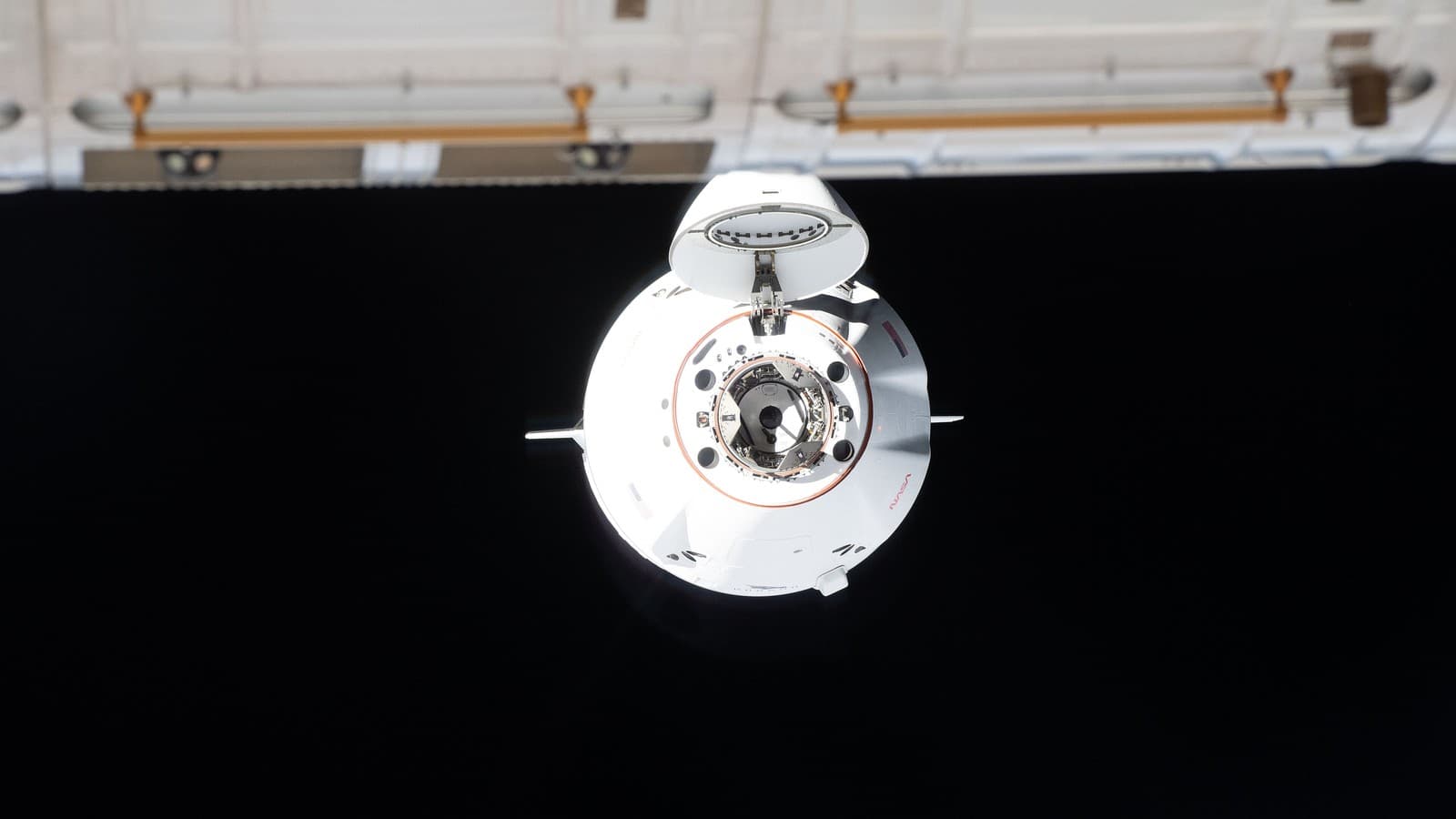
- Thursday, October 15: Dragon is scheduled to dock on its own around 11 a.m. EDT (8 a.m. PDT) to the space-facing port of the station's Harmony module. Arrival coverage begins at 9:15 a.m. EDT.
- Mid-November: Dragon is scheduled to leave the station and splash down off the coast of California with research and cargo.
SpaceX says this Dragon capsule previously flew the CRS-26, CRS-29 and CRS-33 missions.
Why it matters
Commercial resupply flights are how NASA keeps the station stocked and its American research running. The health studies on this flight are aimed at problems people face on the ground, too, from drug-resistant infections to crop losses.
Source
- NASA media advisory M26-078, "NASA Sets Coverage for SpaceX 35th Station Resupply Launch, Arrival," October 7, 2026 (nasa.gov).
- NASA Science, "NASA's SpaceX CRS-35 Mission to Launch Health Research," October 12, 2026 (science.nasa.gov).
- SpaceX, CRS-35 mission page (spacex.com/launches/crs35), for the backup launch opportunity and Dragon flight history.
Notes and sources
- Image: A SpaceX Dragon cargo spacecraft approaches the International Space Station on a previous resupply flight, May 17, 2026 (file photo, not CRS-35). Photo: NASA Johnson Space Center via Wikimedia Commons (Public domain).
- Author: Ryan Standley / Record of Sale, LLC / Notice Nearby.
- Discussed on @NoticeNearYou: (pending — fill xPostUrl after live post).
- Not legal advice. Not a newspaper. Not Legal Publication. Record of Sale, LLC (Oregon).
Space desk · Notice Nearby public papers shelf. @NoticeNearYou post pending.
Not legal advice. Not a newspaper. Not Legal Publication. Record of Sale, LLC (Oregon).