Public paper · October 4, 2026 · Energy desk
Whole-Home Water Softener and RO Systems: A Start-to-Finish Buyer Guide
A plain-language buyer guide to whole-home water softeners and reverse-osmosis systems: hard water versus TDS, ion-exchange versus salt-free claims, RO under-sink versus whole-home, NSF/ANSI pointers, EPA drinking-water context, install path, cost frames, and the first year of ownership.
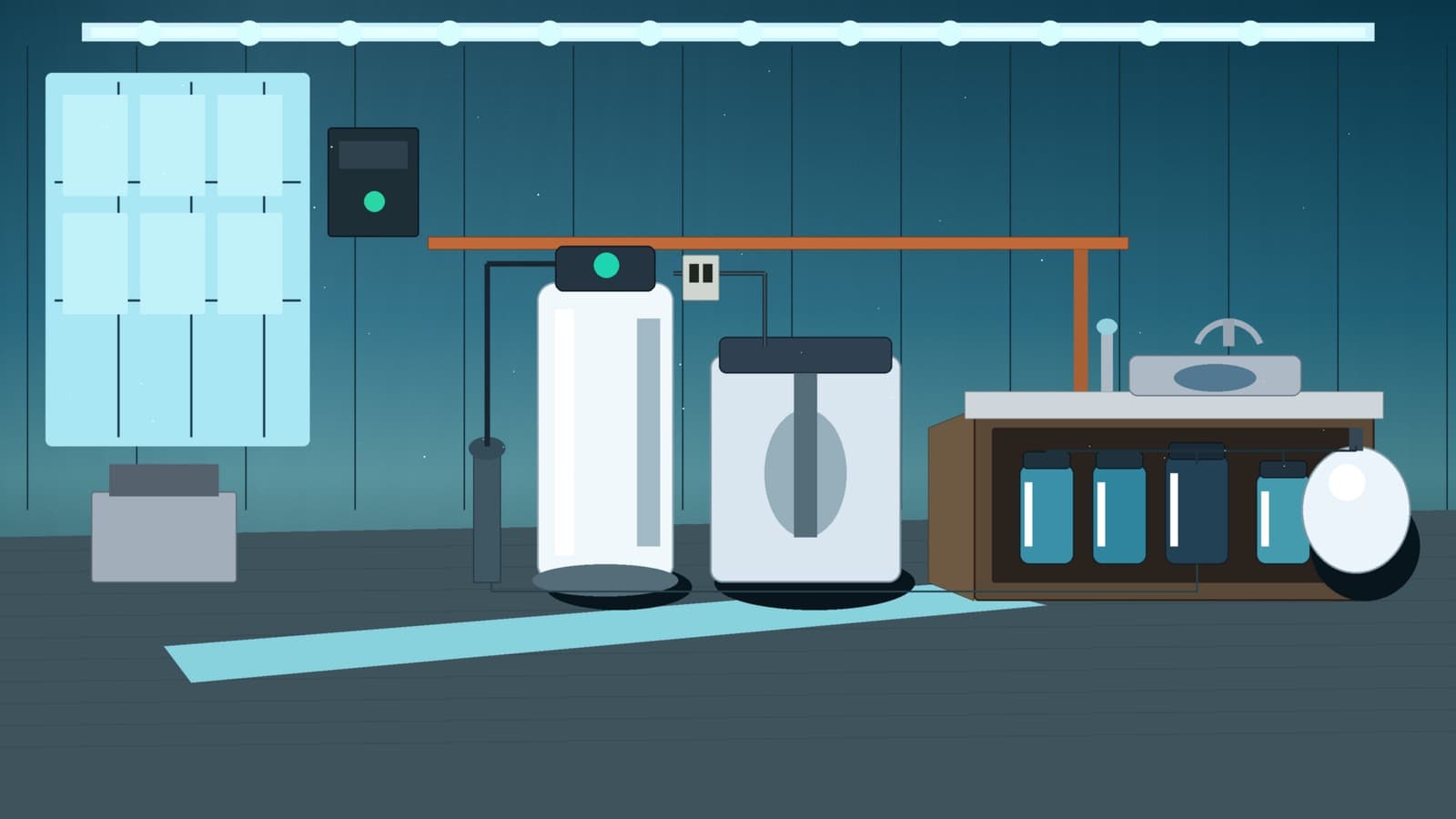
noticenearby.com/papers/whole-home-water-softener-ro.pdf
Hard water leaves spots on glass, scale in a water heater, and soap that will not rinse clean. High dissolved solids can taste flat or mineral. Some homes also need treatment for contaminants that a softener was never designed to remove. The expensive-consumer mistake is buying one box labeled “water system” and expecting it to do every job.
This paper is a start-to-finish buyer guide to whole-home water softeners and reverse-osmosis (RO) systems for a typical U.S. house. It is not a bid, not a water test, not a permit, and not medical or legal advice. Local plumbing codes, health departments, and your water utility or well report win when they disagree with anything here.
Companion Notice Nearby papers on related home mechanical gear: whole-home standby generators at https://noticenearby.com/papers/whole-home-standby-generators — home solar + battery packages at https://noticenearby.com/papers/home-solar-battery-packages — EV Level 2 hardwired chargers at https://noticenearby.com/papers/ev-level-2-hardwired-chargers
What hard water, TDS, and “contaminants” mean in plain language
Hardness is mostly dissolved calcium and magnesium. Plumbers and water labs often report it in grains per gallon (gpg) or milligrams per liter (mg/L) as calcium carbonate. Soft water is low hardness. Moderately hard and hard water leave more scale on fixtures and inside heaters. Very hard water can shorten appliance life and raise soap use. Hardness is an aesthetic and equipment problem more often than an acute health emergency — but you still need a real test, not a guess from a neighbor’s faucet.
Total dissolved solids (TDS) is a broad meter reading of everything dissolved in the water that conducts electricity. TDS is not a poison label by itself. It rises with hardness minerals, sodium, chloride, nitrate, and many other ions. An RO system lowers TDS at the drinking tap. A softener swaps hardness ions for sodium (or potassium) and usually does not slash TDS the way RO does.
“Contaminants” is the word people use for everything from chlorine taste to lead, arsenic, nitrate, PFAS, bacteria, or iron. Different problems need different certified treatments. A softener that removes hardness will not reliably remove lead. An under-sink RO certified for certain contaminants may still leave untreated water at the shower and laundry. Match the technology to the lab result.
Public-water customers get Consumer Confidence Reports from their utility. EPA’s drinking-water overview and Safe Drinking Water Act pages explain how community systems are regulated: https://www.epa.gov/ground-water-and-drinking-water — https://www.epa.gov/sdwa — basic consumer context: https://www.epa.gov/ground-water-and-drinking-water/basic-information-about-your-drinking-water — national primary standards education: https://www.epa.gov/ground-water-and-drinking-water/national-primary-drinking-water-regulations — CDC public drinking-water quality overview: https://www.cdc.gov/healthywater/drinking/public/water_quality.html — CDC treatment overview: https://www.cdc.gov/healthywater/drinking/public/water_treatment.html
Private wells are different. They are not covered by the same federal public-water rules. EPA’s private-wells education is the starting point: https://www.epa.gov/privatewells — home protection overview: https://www.epa.gov/privatewells/protect-your-homes-water — test on a schedule that matches your local geology and septic situation; do not treat a softener sales pitch as a well report.
When softener versus RO versus both:
- Softener (ion exchange) when hardness scale, soap scum, and heater efficiency are the main complaints and the lab shows hardness is the driver.
- Under-sink RO when you want lower TDS / selected contaminant reduction at the drinking and cooking tap, and the rest of the house can stay on soft or municipal water.
- Both when hardness is high enough to justify whole-home softener and you also want RO-quality drinking water (soften first, then RO, is a common trained-installer sequence so the RO membrane sees less hardness scale).
- Softener alone is the wrong buy for lead, nitrate, many organics, or pathogen problems that need certified filters, RO claims, UV, or other listed treatments.
- Whole-home RO is unusual and expensive for most single-family houses; under-sink RO covers drinking water for far less plumbing drama.
Ion-exchange softener versus salt-free conditioner versus “TAC” claims — be honest
A conventional residential water softener is an ion-exchange unit. Hardness ions (calcium, magnesium) stick to resin beads. During regeneration, a brine of salt (sodium chloride) or potassium chloride washes the hardness off the resin and sends it to a drain. Soft water then runs to the house. That is real softening: hardness numbers drop.
A “salt-free water softener” in advertising is often not an ion-exchange softener. Many salt-free products are conditioners, template-assisted crystallization (TAC) media, or other scale-reduction devices. They may change how scale forms or sticks. They typically do not remove hardness ions the way a softener does. Soap feel, lab hardness, and heater scale behavior can differ from true soft water. Read the claim language. If the box says “softener” but uses no salt and no regeneration drain, ask what hardness reduction the certification actually covers.
Template-assisted crystallization and similar media are sold as scale control without salt bags. Independent education from NSF and the Water Quality Association (WQA) matters more than a brochure photo. NSF consumer water-quality resources: https://www.nsf.org/consumer-resources/water-quality — NSF water hub: https://www.nsf.org/water — WQA learn-about-water / treatment education: https://www.wqa.org/Learn-About-Water — https://www.wqa.org/Learn-About-Water/Water-Treatment — WQA product certification programs overview: https://www.wqa.org/Programs/Product-Certification
Manufacturer education hubs (not store carts) for how product families are described: Culligan home education entry: https://www.culligan.com/home — Pentair residential and education-support: https://www.pentair.com/en-us/residential.html — https://www.pentair.com/en-us/education-support.html
Honest buying rule: call ion-exchange salt systems “softeners.” Call salt-free scale devices what their NSF/WQA paperwork says they are. Do not pay softener money for a conditioner and then wonder why the hardness test still reads hard.
Whole-home softener sizing — grains, hardness, people, peak flow (concepts, not a fake calculator)
Sizing is capacity and flow, not “biggest tank on the truck.”
Capacity is often discussed in grains of hardness removal between regenerations. A rough conceptual equation installers teach buyers is: hardness (gpg) × household gallons per day ≈ grains used per day. Multiply by days between regenerations for a capacity target, then add reserve so you do not run out of soft water before the next regen. People, laundry habits, irrigation on soft water, and leaks all change gallons per day. A two-person condo is not a five-person house with teenagers and a soft-water hose bib.
Hardness must come from a test. Municipal averages help; a point-of-use hardness kit or certified lab sample at your tap is better. Iron and manganese can foul resin and need their own pretreatment conversation.
Peak flow (gallons per minute) is the other half. If three showers, a dishwasher, and a laundry fill run together, an undersized softener can channel hard water through before resin contact time is honest. Manufacturers publish service-flow ratings; match them to realistic simultaneous use, not a fantasy of one faucet.
Metered (demand) regeneration usually wastes less salt and water than a blind timer. High-efficiency softeners and settings that avoid unnecessary regenerations save ongoing cost. Softening outdoor irrigation is often a waste of salt and capacity unless you have a specific reason.
This section is conceptual on purpose. No fake “your house needs 48,000 grains” output belongs in a public paper. Bring hardness, people count, and peak-use notes to a licensed plumber or water-treatment professional who will size against the product manual and local code.
Reverse osmosis: under-sink versus whole-home; reject water; remineralization
Reverse osmosis pushes water through a semi-permeable membrane. Dissolved ions and many contaminants are rejected to a drain line as wastewater (concentrate). Product water (permeate) goes to a storage tank and a dedicated faucet, or in rare whole-home designs to a pressurized distribution system.
What RO is good at (when the system is certified for the claim): lowering TDS, and reducing many dissolved contaminants listed on the product’s NSF/ANSI 58 or equivalent claim sheet. What RO is not: a magic sterilizer for every microbe, a substitute for a broken well seal, or a reason to ignore a boil-water notice.
Under-sink RO is the common residential pattern: sediment and carbon prefilters, membrane, storage tank, polishing filter, air-gap faucet, drain saddle or air-gap drain. It treats drinking and cooking water. Showers and laundry stay on house water (often softened).
Whole-home RO treats all or most plumbing. It is uncommon in ordinary houses because membranes produce substantial reject water, need large storage or booster pumps, and can deliver very low-mineral water that some owners then remineralize. Plumbing, drain capacity, and operating cost jump. Whole-home RO shows up more often in specialized water-quality situations — not as the default upgrade after a softener brochure.
Wastewater / reject ratio: older or poorly set systems can send several gallons to drain per gallon of drinking water. Higher-efficiency RO designs and permeate pumps improve the ratio; they do not make reject zero. Ask for the product’s rated efficiency and expected daily drain volume for your TDS and pressure.
Remineralization cartridges add calcium/magnesium back for taste and to reduce aggressiveness toward metal. Taste is personal. Remineralization is optional for many under-sink owners and more often discussed when RO water is the primary drinking supply.
NSF’s drinking-water treatment unit listings are a practical search tool for certified softeners and RO gear: https://info.nsf.org/Certified/DWTU/ — softener product-type listing entry point: https://info.nsf.org/Certified/DWTU/listings.asp?ProductType=Softener
Prefilters, sediment, carbon, and UV as companions
Treatment is often a train, not a single tank.
Sediment prefilters catch sand, silt, and rust flakes that would plug softener resin or RO membranes. Spin-down filters and cartridge filters are common on well water.
Carbon filters reduce chlorine/chloramine taste and odor and protect RO membranes from chlorine attack. Catalytic carbon and correct contact time matter for chloramine — read the claim sheet.
Softener resin can be damaged by chlorine over time and fouled by iron; pretreatment is part of honest design on some supplies.
Ultraviolet (UV) disinfection addresses many microbiological concerns when the water is already clear enough for UV to work. UV does not remove hardness or TDS. It is a companion, not a softener replacement. Cloudy water needs filtration before UV.
Iron, sulfur odor, tannins, and hardness together may need a sequenced design: oxidation/filtration, then softener, then RO at the kitchen. Skipping the sequence to save a sales visit is how membranes die early.
NSF/ANSI standards pointers — claims you can verify
Certification language is how you compare boxes without a lab in your garage.
- NSF/ANSI 44 covers residential cation-exchange water softeners (softening performance and related claims in the standard’s scope).
- NSF/ANSI 58 covers reverse-osmosis drinking-water treatment systems.
- NSF/ANSI 42 covers aesthetic effects (chlorine, taste/odor, particulates — as claimed).
- NSF/ANSI 53 covers health-effects claims (specific contaminants listed on the certificate — lead and others when claimed).
- Other standards exist for UV, filters, and emerging claims; match the certificate to the problem on your lab report.
Search listings and read the exact reduction claims: https://info.nsf.org/Certified/DWTU/ — NSF consumer water-quality education: https://www.nsf.org/consumer-resources/water-quality — NSF water: https://www.nsf.org/water — NSF knowledge library hub: https://www.nsf.org/knowledge-library — WQA certification program overview: https://www.wqa.org/Programs/Product-Certification
If a seller will not show a current certificate number and the claim sheet for your contaminant, pause the purchase.
EPA / Safe Drinking Water Act context — public water versus private wells
If you are on a community water system, the utility treats and monitors under the Safe Drinking Water Act framework. Your annual Consumer Confidence Report is the free homework before any softener pitch. EPA drinking-water home: https://www.epa.gov/ground-water-and-drinking-water — SDWA overview: https://www.epa.gov/sdwa — regulations education: https://www.epa.gov/dwreginfo/drinking-water-regulations — Contaminant Candidate List education for what EPA is studying: https://www.epa.gov/ccl
Point-of-use and point-of-entry devices at home are extra layers for taste, hardness, or specific contaminants your utility does not remove to your preference. They do not replace the utility’s legal obligations, and they do not excuse ignoring a public notice.
Private wells: you are the water system. Test before you buy treatment. Retest after install. EPA private wells: https://www.epa.gov/privatewells — CDC drinking-water hub: https://www.cdc.gov/drinking-water/
Hardness varies by region and aquifer. Treat maps and averages as context, then test your tap. Do not size a softener from a national map alone.
Install path: test → permit/code → bypass → drain → brine → flush → first-year cadence
A sane sequence looks like this.
- Water test. Hardness, iron, manganese, pH, TDS, and any health contaminants you care about (lead, nitrate, arsenic, bacteria on wells). Use a lab or utility report you trust.
- Decide softener, RO, both, or neither. Match certificates to results.
- Permits and plumbing code. Many jurisdictions require a permit for potable-water modifications, backflow protection, and drain connections. Softener drain and RO reject water must meet local indirect-waste and air-gap rules. A licensed plumber who knows residential treatment is worth more than a free “today only” install.
- Main-line placement. Whole-home softeners usually sit after the meter / pressure tank and before the water heater, with outdoor hose bibs optionally left hard. Confirm irrigation plans.
- Bypass valve. Always. Service and resin replacement without shutting the whole house becomes miserable without a bypass.
- Drain. Regeneration brine and RO reject need a legal drain path — standpipe, laundry sink, floor drain with air gap as code requires. Wrong drain hookups cause backups and failed inspections.
- Brine tank. Salt bridge and mush are first-year complaints. Keep the tank clean, use the salt type the manual allows, and do not overfill into a solid cake.
- Electrical. Most softeners need a nearby outlet for the control head. GFCI rules apply in wet locations per local code.
- Startup flush. Run the manufacturer’s startup: regenerate, flush lines, check for leaks, verify hardness at a soft tap after the unit is in service.
- RO startup. Sanitize per manual, discard initial tanks of water as instructed, check faucet air gap, confirm drain flow, and schedule prefilter changes.
- First-year salt and filter cadence. Softeners consume salt based on hardness and water use. RO prefilters often land on a six-month-ish cadence; membranes last longer but fail early if chlorine or sediment sneak through. Put dates on a calendar.
Manufacturer manuals beat generic blog steps. Culligan and Pentair education/support hubs above are starting points for reading product-family documentation — still verify the exact model literature.
Cost frames — ranges and concepts only, not quotes
Rough frames, not a bid:
- Softener equipment: residential ion-exchange units span a wide band from simpler timed units to high-capacity metered systems with better electronics. Accessories (bypass, loop, sediment prefilter) add cost.
- Softener install: short basement run near a drain is one job. Crawlspace main-line cut-in, new drain, electrical, and permit is another. Ask for line items: permit, valves, fittings, labor, haul-away, startup.
- Ongoing softener cost: salt or potassium bags, electricity for the head, extra water for regeneration, occasional resin or media service years later.
- Under-sink RO equipment: typically far less than a whole-home membrane plant; budget for faucet, tank, and install access under the sink.
- RO ongoing cost: sediment/carbon prefilters, membrane eventual replacement, remineralization cartridges if used, and the sewer cost of reject water where utilities meter wastewater.
- Whole-home RO: treat as a specialty project — pumps, storage, drains, remineralization, and higher operating cost — get multiple written scopes.
Incentives are uncommon compared with heat pumps or EVs, but utility or state water-efficiency programs sometimes exist. WaterSense is EPA’s efficiency label education for products and programs: https://www.epa.gov/watersense — confirm any rebate on the program’s own page before you bake it into a spreadsheet.
Compare bids on the same hardness assumption, capacity, regen style, bypass included or not, drain work, and whether outdoor spigots stay hard.
Mistakes that waste money
- Undersizing capacity or flow so the house runs hard water at peak times.
- Skipping a bypass valve.
- Illegal or flooded drain connections for brine or RO reject.
- Buying a salt-free “softener” expecting ion-exchange soft water.
- Softener-only for lead, nitrate, or other health contaminants that need certified RO/filter claims.
- Whole-home RO without understanding reject volume, pump noise, and remineralization.
- Softening the irrigation system by accident and burning salt.
- No sediment/carbon pretreatment when the supply needs it — early membrane or resin death.
- Ignoring iron/manganese until the resin is chocolate pudding.
- DIY main-line work without permits where permits are required.
- Never retesting after install.
- Stacking retailer cart links and “limited time” hardness demos in place of a lab report.
First year of ownership
Month one: confirm soft water at laundry and showers (hardness test strips help spot a bypass left open). Confirm RO faucet flow and taste after the break-in flushes. Check every fitting for seepage after the first few regenerations and tank fills.
Months two to six: watch salt level; break salt bridges; order filters before you are out. Listen for unusual regen frequency — a silent leak or a bad meter turbine wastes salt. Keep the brine tank from turning into a humid junk shelf.
Months six to twelve: replace RO prefilters on schedule; consider a lab spot-check on any health contaminant you installed RO to address. Softener resin usually lasts years, but chlorinated water and iron shorten life — follow the manual. Note vacation mode if the product has one so you do not regen into an empty house forever or return to stale RO tanks.
Keep manuals, certificate numbers, water tests, and the plumber’s invoice in one folder. The second owner of the house will ask. So will the next technician.
Comparing the common product families side by side
Put the boxes in one table in your head before you sign.
Ion-exchange softener: removes hardness at the whole house (or the portion after the unit). Needs salt or potassium, a drain, electricity, and periodic regen. Best when scale and soap performance are the problem and hardness is documented.
Salt-free conditioner / TAC-style media: may reduce scale adhesion claims per its certificate. Usually no salt bags and often no regen drain. Hardness ions typically remain. Best approached as scale management, not as “soft water” marketing.
Under-sink RO: high-quality drinking and cooking water with a dedicated faucet. Reject water to drain. Filter cadence is real ownership work. Best when TDS or listed contaminant reduction at the tap matters.
Whole-home RO: treats essentially all fixtures. High capital and operating complexity. Best left for documented specialty cases after under-sink options are honestly rejected.
Sediment + carbon only: cheaper taste/odor and particulate control. Will not soften. Will not match RO’s dissolved-ion reduction. Fine as a first step when the lab says that is all you need.
Hybrid paths are normal: sediment → carbon → softener on the main, RO under the kitchen sink. That is not “upselling” when each stage maps to a test result.
Pressure, temperature, and where the equipment lives
Softener resin and RO membranes have operating pressure and temperature windows in the manual. A house with low well pressure may need a booster before RO will make water at a useful rate. A garage that freezes will destroy tanks and membranes — indoor mechanical rooms and conditioned basements are the usual homes for this gear. Direct sun on plastic brine tanks ages them. Leave service space around the mineral tank and brine tank so a technician can swap media without demolishing shelving.
Hot water should not run backward into a softener or RO in ways the listing forbids. Expansion tanks, check valves, and heater placement belong in the plumber’s sketch. If your water heater is already full of scale, softening going forward does not clean the old tank; flush or replace on its own schedule.
How this paper fits the expensive-consumer series
Notice Nearby’s expensive-consumer AdSense papers walk large home purchases with standards links and no retailer carts. Generators cover backup power. Solar + battery covers on-site electricity storage. EV Level 2 covers hardwired charging. Water softener / RO covers the plumbing-mechanical spend that shows up when hardness or drinking-water chemistry finally forces a decision. The same honesty rules apply: education links, ranges not fake quotes, and an install path you can hand to a licensed trade.
Bottom line
Start with water chemistry, not a showroom. Use ion-exchange softeners for hardness. Use certified RO or filters for the dissolved or health claims on the certificate. Prefer under-sink RO for drinking water unless you have a documented whole-home reason. Demand NSF/ANSI or WQA paperwork, a bypass, a legal drain, and a permit path. Size from hardness, people, and peak flow — not from fear. Retest in year one.
Not legal advice. Not a newspaper. Not Legal Publication. Record of Sale, LLC (Oregon).
Notes and sources
- Author: Ryan Standley / Record of Sale, LLC / Notice Nearby.
- Discussed on @NoticeNearYou: (pending — fill xPostUrl after live post).
- Not legal advice. Not a newspaper. Not Legal Publication. Record of Sale, LLC (Oregon).
Energy desk · Notice Nearby public papers shelf. @NoticeNearYou post pending.
Not legal advice. Not a newspaper. Not Legal Publication. Record of Sale, LLC (Oregon).