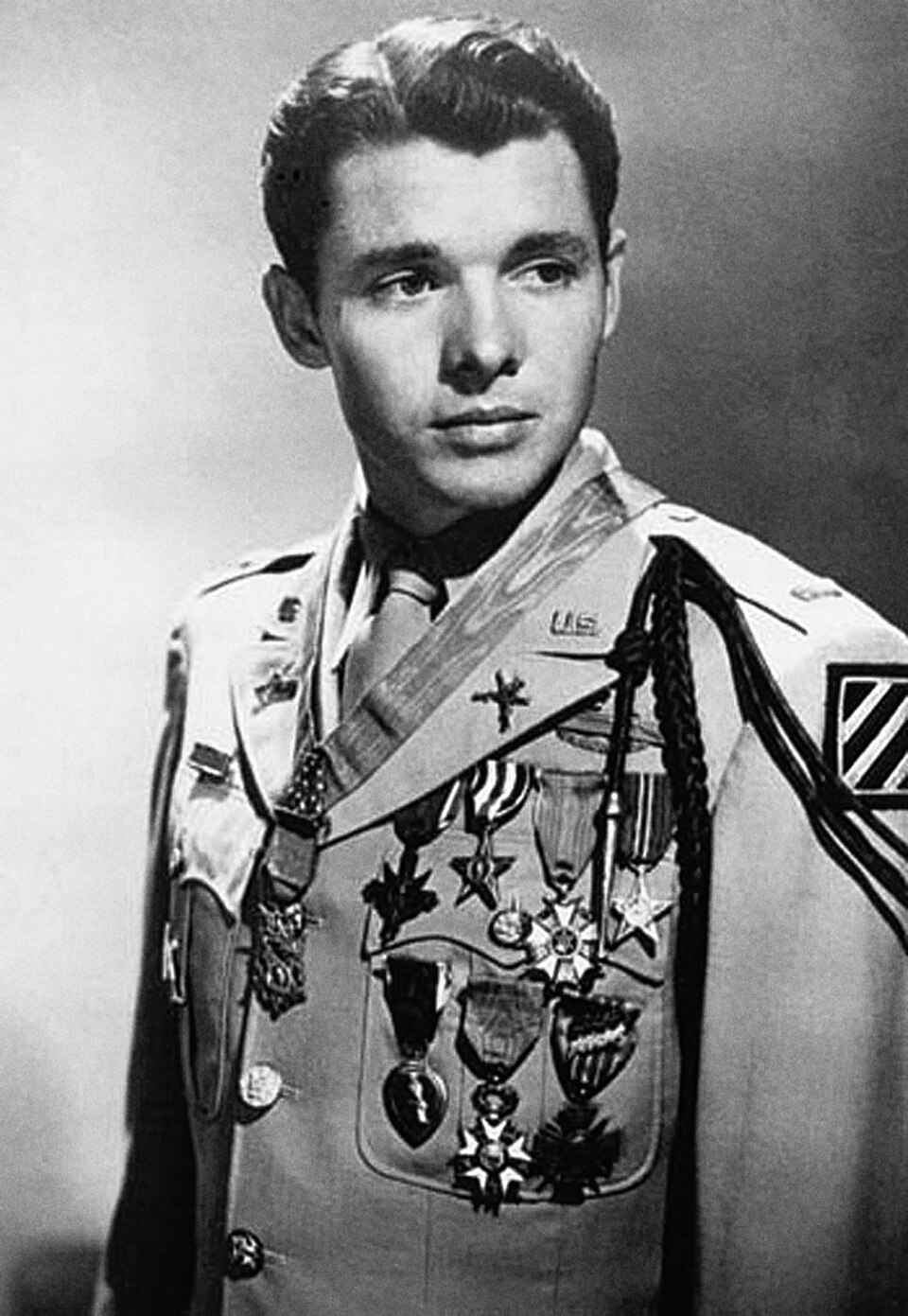
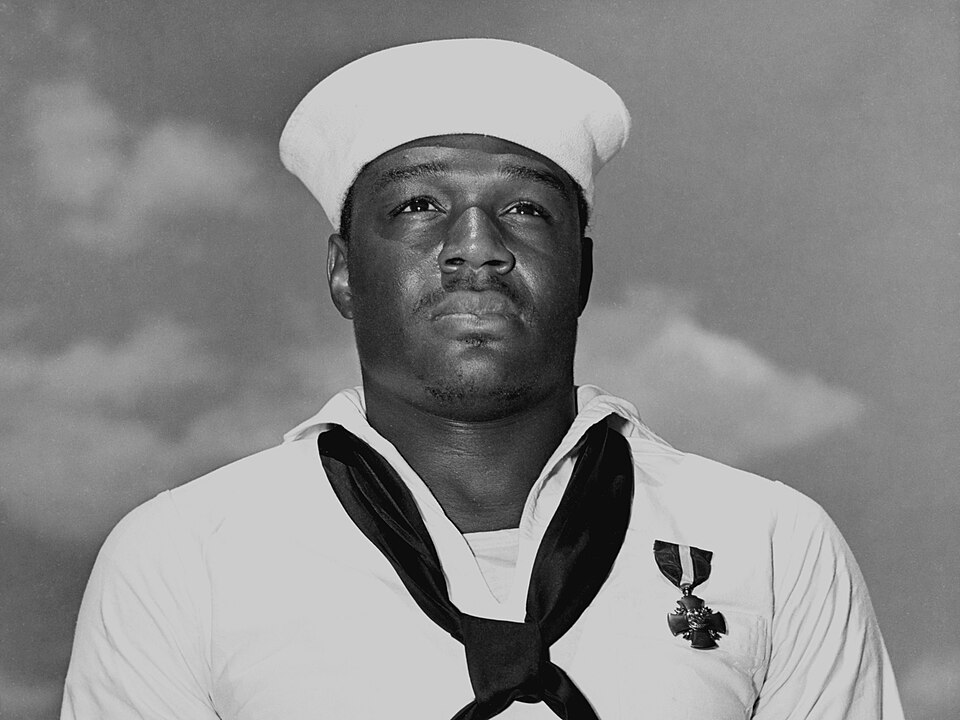
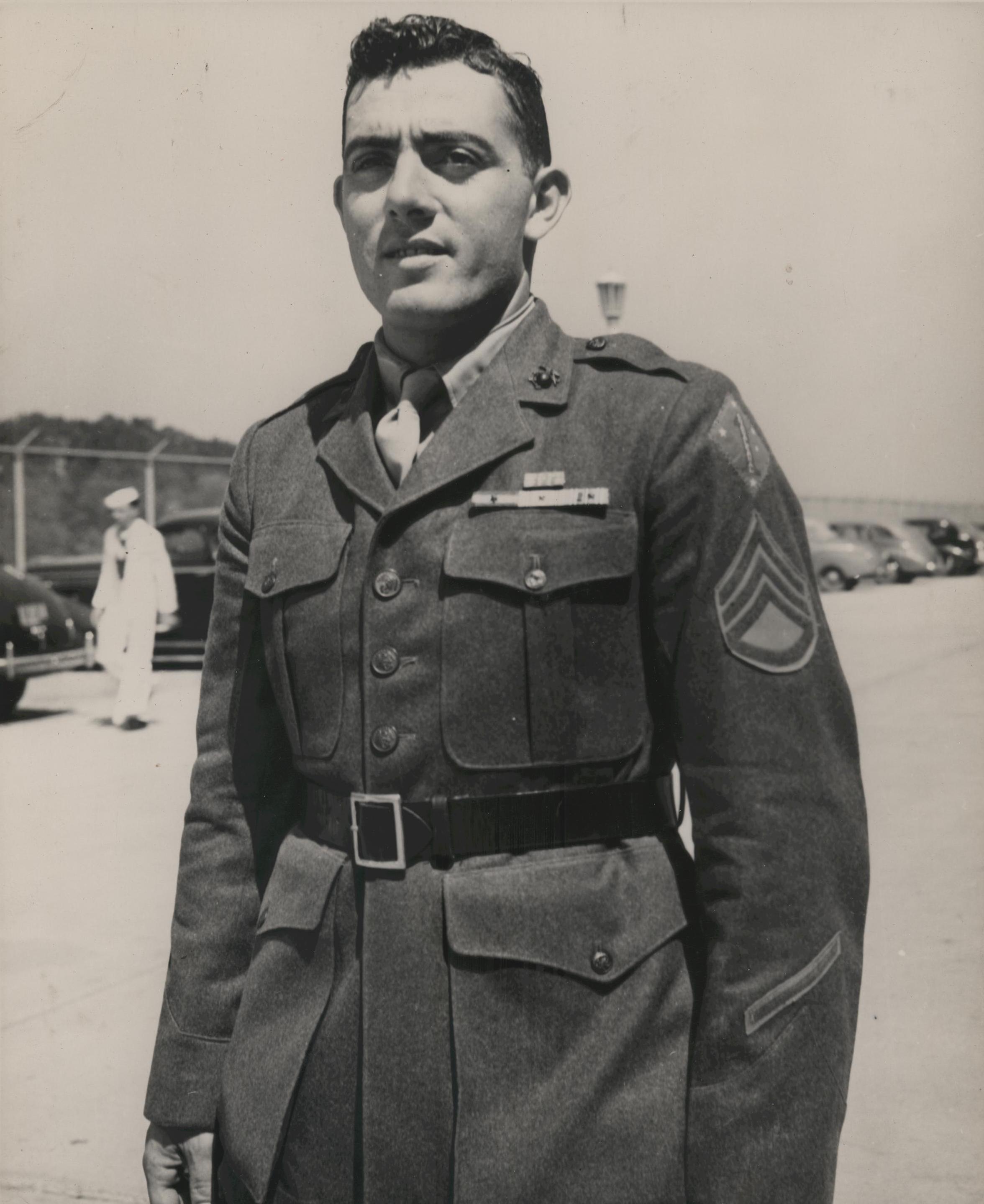
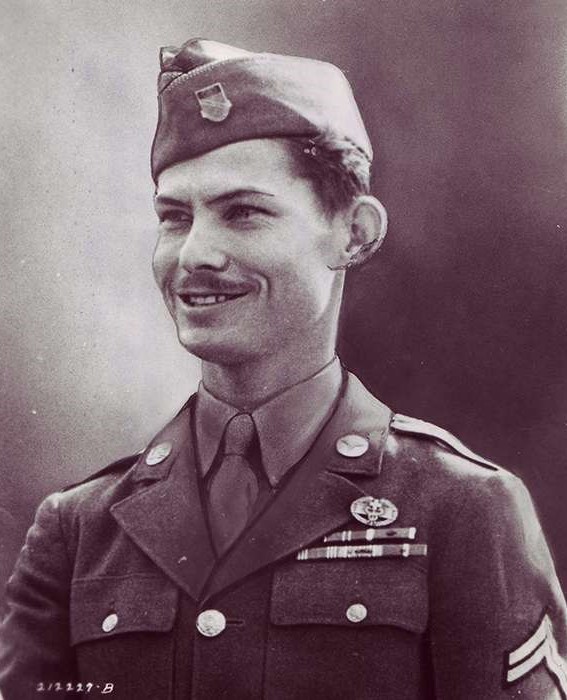
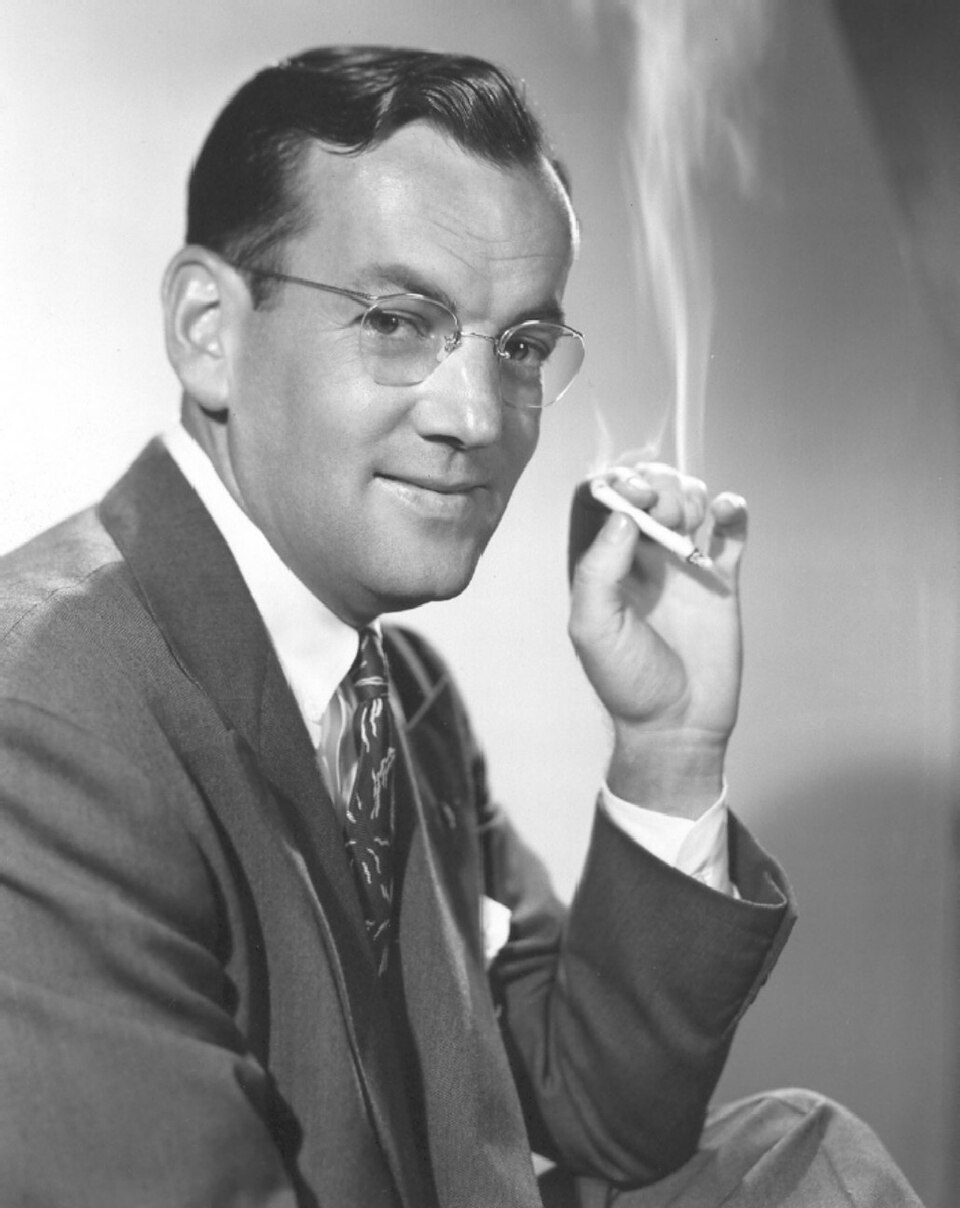
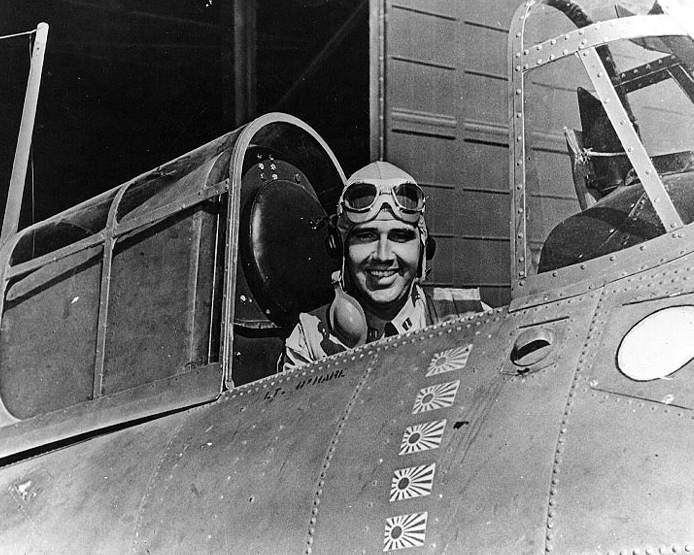
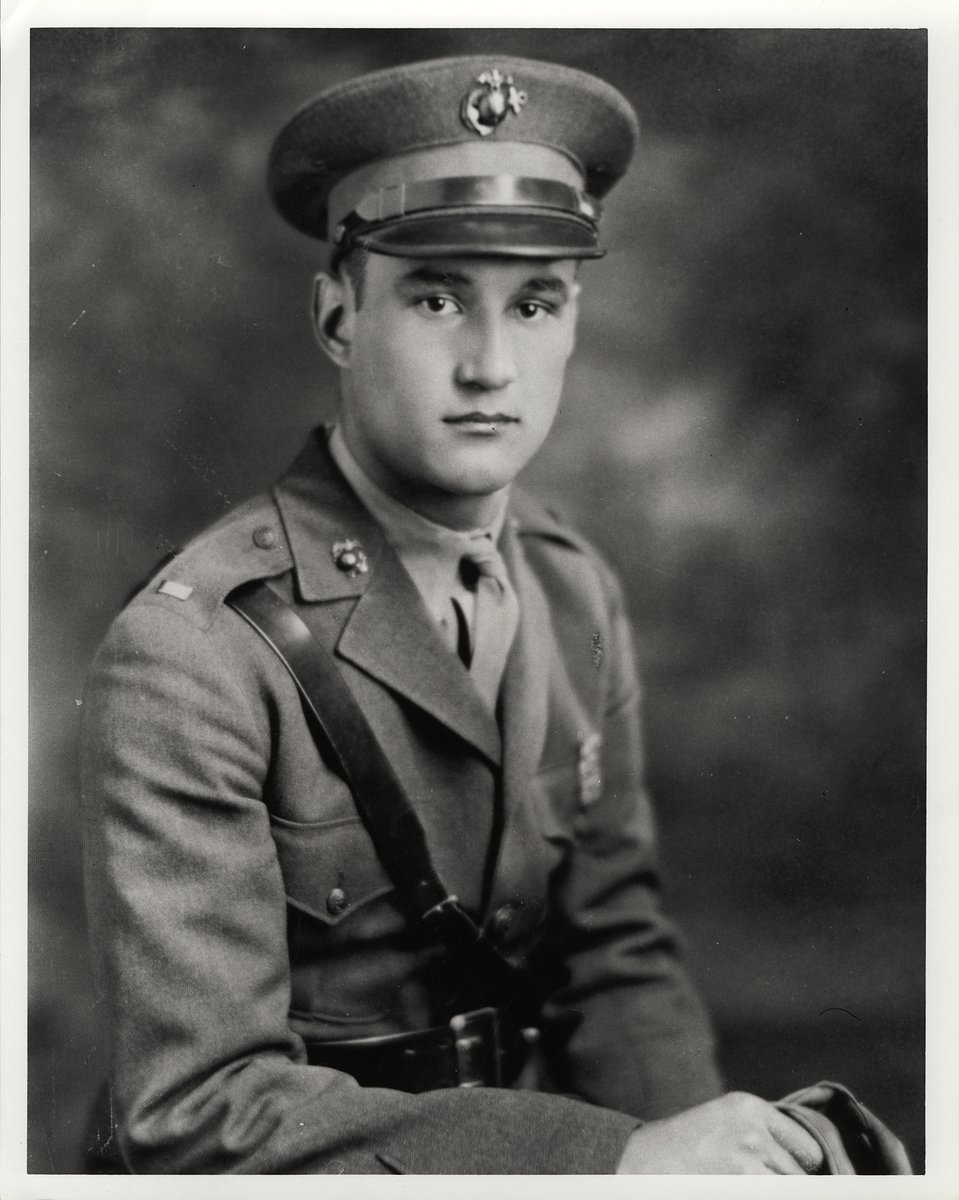
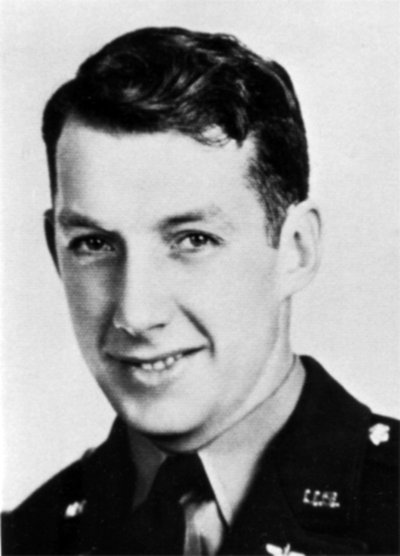
The largest American war. This roll includes Murphy, Doris Miller, Basilone, Doss, Glenn Miller, Edward O'Hare, and Leon R. Vance Jr. Miller and O'Hare show the difference this register keeps: a known sinking is not a missing aircraft. Vance is a missing C-54 after a Medal of Honor ditching — still unaccounted for.
American War Heroes is a publisher-curated historical register. Notice Nearby writes these entries from documented public records. Checkout does not add a name to a war roll, and we do not issue Heroes badges, MIA labels, or a “verified veteran” mark.
A paid Community memorial may mention military service in the family’s own words. That mention stays on the obituary. It is not verification, and it does not enroll anyone on these lists. Claiming service that was not given is stolen valor. It is disrespectful to those who served.
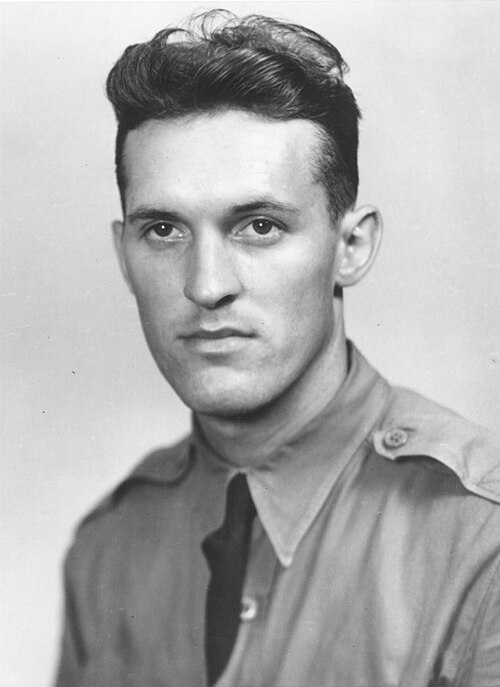
Audie Leon Murphy left a Hunt County sharecropper's childhood for the infantry and became, by the army's own count, the most decorated American soldier of the Second World War. The Medal of Honor action was January 26, 1…
Doris Miller — Dorie to the navy that learned his name late — was a Waco mess attendant on USS West Virginia because the service still assigned Black sailors to the mess. On December 7, 1941, he carried wounded men, incl…
John Basilone held a section of the line on Guadalcanal in October 1942 with two machine guns, a few Marines, and a night that did not end on schedule. The Medal of Honor citation describes the repair of guns under fire …
Desmond Thomas Doss was a Seventh-day Adventist from Lynchburg who would not carry a rifle and would not leave the infantry. The army called him a conscientious objector and then a medic. On Okinawa, in May 1945, on the …
Alton Glenn Miller was already a famous bandleader when he put on an Army Air Forces uniform. He was born in Clarinda, Iowa, on March 1, 1904. The service used him the way a modern army uses morale — to keep men remember…
1914–missing November 26, 1943 · Lieutenant Commander
Edward Henry O'Hare — Butch in the ready rooms — was a St. Louis Annapolis graduate (1937) who became, on February 20, 1942, the Navy's first flying ace of the war. Flying an F4F from USS Lexington, he broke up a formati…
1916–unaccounted for since July 26, 1944 · Lieutenant Colonel
Leon Robert Vance Jr. left Enid, Oklahoma, for the Army Air Forces and a heavy-bombardment cockpit. On June 5, 1944, as a lieutenant colonel and command pilot with the 489th Bombardment Group, he led a formation against …
1908–unaccounted for since November 14, 1942 · Lieutenant Colonel
Harold William Bauer left Woodruff, Kansas, for Annapolis and a Marine cockpit. By the Guadalcanal campaign of 1942 he was a lieutenant colonel commanding Marine Fighting Squadron 212 — Hellcats in the ready-room talk, W…
1919–unaccounted for since August 9, 1944 · Captain
Darrell Robins Lindsey left Jefferson, Iowa, for the Army Air Forces and a B-26 Marauder cockpit. By the summer of 1944 he was a captain in the 585th Bombardment Squadron, 394th Bombardment Group, flying medium-bomber mi…
1898–unaccounted for since January 5, 1943 · Brigadier General
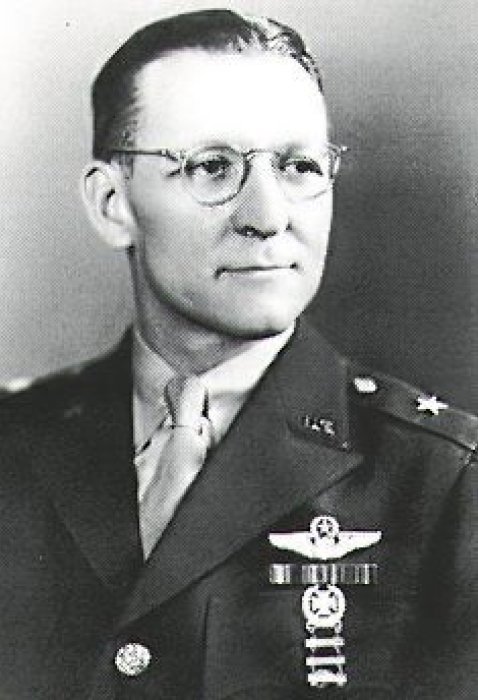
Kenneth Newton Walker left the New Mexico Territory for the Air Service and spent two decades arguing that bombardment aviation had to be organized as a force of its own. By late 1942 he was a brigadier general commandin…
Richard Eugene Fleming left Saint Paul for the Marine Corps Reserve and a scout-bomber cockpit. By early June 1942 he was a captain and flight officer with Marine Scout Bombing Squadron 241 on Midway, flying worn SB2U Vi…
1917–unaccounted for since November 2, 1943 · Major
Raymond Harrell Wilkins left Portsmouth, Virginia, for the Army Air Corps as an enlisted man in 1936, earned his wings before Pearl Harbor, and was already in the Southwest Pacific when the war opened for the United Stat…