Public paper · October 13, 2026 · Supreme Court desk
Berry v. United States, No. 25-7026: Can a Prisoner Appeal When His Own Circuit Says No but Another Circuit Says Yes? The Supreme Court Will Decide
The Supreme Court granted review on October 13, 2026 in Berry v. United States, a federal habeas case from the Eleventh Circuit about when courts must issue a certificate of appealability. Here are the parties, the exact question, the timeline and the terms, explained.
noticenearby.com/papers/scotus-case-berry-v-united-states-25-7026.pdf
On October 13, 2026, the Court granted Corey Duran Berry's motion to proceed in forma pauperis and his petition in No. 25-7026, Berry v. United States (Supreme Court Order List, Oct. 13, 2026, p. 3).
This paper uses only the Court's dockets, orders and the official filings and opinions named under Sources. Each fact is cited. Legal terms are explained in plain words at the bottom of the page.
Who the parties are
- Petitioner: Corey Duran Berry, represented by Andrew Lee Adler of the Federal Public Defender's Office in Fort Lauderdale, Florida (docket No. 25-7026).
- Respondent: the United States, represented by Solicitor General D. John Sauer (same docket).
- Amici curiae: the National Association of Criminal Defense Lawyers and a group of former federal judges filed briefs on May 8, 2026 (same docket).
What happened in the lower courts
- The U.S. District Court for the Southern District of Florida denied Berry's second motion to vacate his sentence under 28 U.S.C. § 2255 on April 17, 2025 (Petition, Related Proceedings).
- On February 18, 2026, the Eleventh Circuit denied him a certificate of appealability, which meant he could not appeal (Petition, Appendix A; docket No. 25-7026).
- The United States first waived its right to respond. The Court requested a response on April 8, 2026, and the government filed its opposition on May 27 (docket No. 25-7026).
The question the Court is deciding
"Whether a certificate of appealability under 28 U.S.C. § 2253 should be granted where the issue that the petitioner seeks to raise on appeal has been resolved against him by binding circuit precedent but has been resolved in his favor by another circuit." (Petition, No. 25-7026, Question Presented.)
Case timeline
- Apr. 17, 2025: District court denies second § 2255 motion.
- Feb. 18, 2026: Eleventh Circuit denies a certificate of appealability.
- Mar. 10, 2026: Petition filed.
- Apr. 8, 2026: Court requests a response.
- May 8, 2026: Two amicus briefs.
- May 27, 2026: U.S. opposition.
- Oct. 13, 2026: Certiorari granted.
What's at stake (in the official documents' own words)
- Federal law allows such an appeal only if a judge issues a certificate of appealability, which requires "a substantial showing of the denial of a constitutional right" (Petition, Question Presented, quoting 28 U.S.C. § 2253(c)).
- Berry's petition says "The circuits are squarely divided on the question presented": it counts three circuits on one side and two on the other (Petition, Table of Contents, Parts I.A-I.B). That is the petitioner's description.
What happens next, and when
The Court will set briefing and argument. No date is listed yet (docket No. 25-7026).
What these terms mean
- Certiorari (writ of certiorari) (say it: ser-shee-uh-RAIR-ee). Means: An order from the Supreme Court telling a lower court to send up the records of a case the Justices have agreed to hear. Origin and history: The Certiorari Act of 1925 gave the Supreme Court the choice of whether to hear most appeals. Today it agrees to hear about 100 to 150 of the more than 7,000 cases it is asked to review each year. Source: Meaning: uscourts.gov Glossary of Legal Terms, "Writ of certiorari." History: uscourts.gov, "About the Supreme Court" (Administrative Office of the U.S. Courts).
- Cert granted (say it: SURT GRAN-tid). Means: The Supreme Court has agreed to hear the case. It is not a ruling on who wins. Origin and history: "Cert" is short for certiorari. When a party asks the Court to review its case, it files a petition for a writ of certiorari. Source: uscourts.gov, "About the Supreme Court"; Supreme Court Order List, Oct. 13, 2026 ("The petitions for writs of certiorari are granted").
- In forma pauperis (say it: in FOR-muh PAW-per-iss). Means: Permission to file a case without paying the court's fees, because the person cannot afford them. Origin and history: Latin for "in the manner of a pauper." Source: uscourts.gov Glossary of Legal Terms, "In forma pauperis."
- Habeas corpus (say it: HAY-bee-us KOR-pus). Means: A court order requiring the authorities holding a prisoner to bring the prisoner before a court and justify keeping that person locked up. Origin and history: Latin for "you have the body." Source: uscourts.gov Glossary of Legal Terms, "Habeas corpus."
- Amicus curiae (say it: uh-MEE-kus KYOOR-ee-eye). Means: A brief filed by a person or group that is not a party to the case but has an interest in it, offering its own arguments. Origin and history: Latin for "friend of the court." Source: uscourts.gov Glossary, "Amicus curiae"; uscourts.gov, "Supreme Court Procedures."
- Docket (say it: DOK-it). Means: The court's running log of a case, with a short dated entry for every filing and order. Origin and history: Each Supreme Court case gets a docket number, such as No. 25-1103. Source: uscourts.gov Glossary of Legal Terms, "Docket."
Each term card has a short audio clip of the term spoken by Ryan Standley. The clip players appear when the term-card display goes live.
Read next
- U.S. DOGE Service v. U.S. District Court for D.C.
- Blanche v. Ozurumba
- FCC v. Brown
- Beaird v. United States
- Salazar v. Paramount Global
- Howard v. Texas / In re Howard
- Roofing Designs v. Royal American
- Silva Ochoa v. United States
- Monsanto v. Dennis
- Hobson v. United States
- Order list, Oct. 13, 2026
- Chief Justice stays the Fourth Circuit in FCC v. Brown
- Arguments this week and the November calendar
- Howard stay denials, Oct. 7
Sources
- Supreme Court Order List, Oct. 13, 2026.
- Supreme Court docket No. 25-7026, read Oct. 13, 2026.
- Petition for a writ of certiorari, Berry v. United States, No. 25-7026 (filed Mar. 10, 2026).
Notes and sources
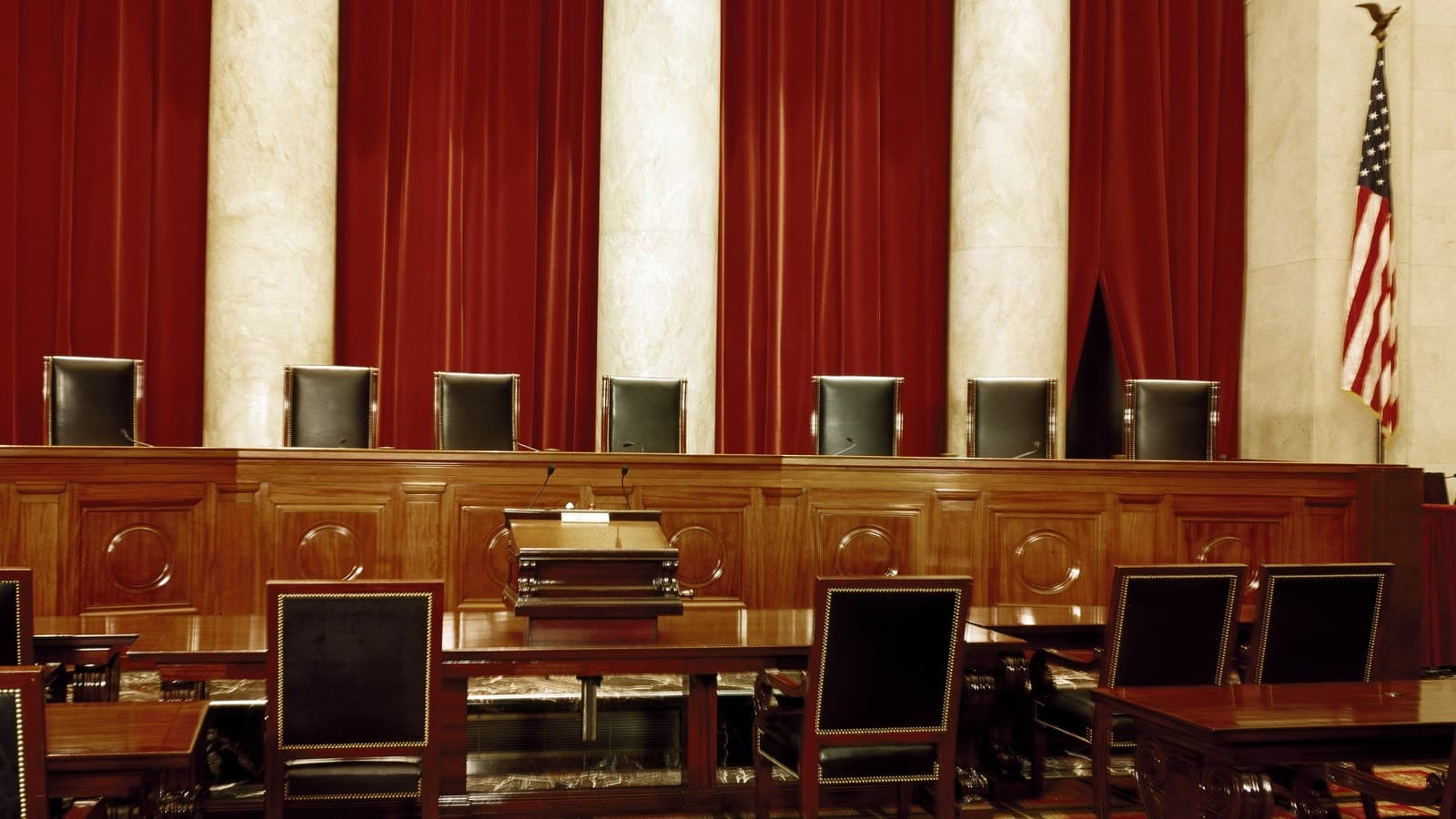
- Image: Supreme Court interior, Washington, D.C. (file photo). Photo: Carol M. Highsmith, Library of Congress (public domain).
- Author: Ryan Standley / Record of Sale, LLC / Notice Nearby.
- Discussed on @NoticeNearYou: (pending — fill xPostUrl after live post).
- Not legal advice. Not a newspaper. Not Legal Publication. Record of Sale, LLC (Oregon).
Supreme Court desk · Notice Nearby public papers shelf. @NoticeNearYou post pending.
Not legal advice. Not a newspaper. Not Legal Publication. Record of Sale, LLC (Oregon).