Public paper · October 13, 2026 · Supreme Court desk
Roofing Designs v. Royal American Construction, No. 25-1367: Sent Back to the Fifth Circuit to Reconsider a Bankruptcy-Disclosure Ruling After Keathley
On October 13, 2026 the Supreme Court granted, vacated and remanded Roofing Designs by JR v. Royal American Construction, a Texas construction case, to the Fifth Circuit for another look in light of Keathley v. Buddy Ayers Construction (2026). Here is what that means, in plain words.
noticenearby.com/papers/scotus-case-roofing-designs-v-royal-american-25-1367-gvr.pdf
On October 13, 2026, the Court granted the petition in No. 25-1367, vacated the Fifth Circuit's judgment and sent the case back "for further consideration in light of Keathley v. Buddy Ayers Construction, Inc., 608 U. S. 647 (2026)" (Supreme Court Order List, Oct. 13, 2026, p. 1).
This paper uses only the Court's dockets, orders and the official filings and opinions named under Sources. Each fact is cited. Legal terms are explained in plain words at the bottom of the page.
Who the parties are
- Petitioner: Roofing Designs by JR, L.L.C., doing business as Roofing Designs, the defendant in district court (Petition, Parties).
- Respondents: Royal American Construction, Inc., the plaintiff, and Hartford Fire Insurance Company, the third-party defendant (Petition and Brief in Opposition, Parties).
What happened in the lower courts
- The case began in the U.S. District Court for the Southern District of Texas, No. 4:21-CV-2440. The Fifth Circuit entered judgment on January 13, 2026 and denied rehearing on March 10, 2026 (Brief in Opposition, Related Proceedings; docket No. 25-1367).
The question the Court is deciding
"Whether the doctrine of judicial estoppel can be invoked to bar a plaintiff who fails to fully or accurately disclose a civil claim in bankruptcy filings from pursuing that claim simply because there is a 'potential motive' for nondisclosure, regardless of whether there is evidence that the plaintiff in fact acted in bad faith." (Petition, No. 25-1367.) The respondents argued the Court should deny review because Keathley "rejected only the Fifth Circuit's rigid two-factor approach to inadvertence" (Brief in Opposition, Question Presented).

Case timeline
- Jan. 13, 2026: Fifth Circuit judgment.
- Mar. 10, 2026: Rehearing denied.
- June 4, 2026: Petition filed.
- Sept. 8, 2026: Brief in opposition.
- Oct. 13, 2026: Granted, vacated and remanded.
What's at stake (in the official documents' own words)
- The Fifth Circuit will reconsider the case using the Supreme Court's decision in Keathley ({OL}).
What happens next, and when
The case returns to the Fifth Circuit. The order does not decide who wins ({OL}).
What these terms mean
- GVR (grant, vacate and remand) (say it: jee-vee-AR). Means: In a single order, the Court takes the case, cancels the lower court's judgment and sends the case back so the lower court can decide it again in light of a newer Supreme Court decision. Origin and history: Lawyers use the shorthand in their filings. The Roofing Designs petition asked for "a GVR," and the opposing brief argued against a "grant-vacate-remand." Source: Petition, No. 25-1367 (June 4, 2026); Brief in Opposition, No. 25-1367 (Sept. 8, 2026); Supreme Court Order List, Oct. 13, 2026.
- Vacated and remanded (say it: VAY-kay-tid and ree-MAN-did). Means: "Vacated" means the lower court's judgment is canceled and no longer in force. "Remanded" means the case goes back to the lower court for further proceedings. Origin and history: A remand is the act of an appellate court sending a case back to a lower court for further proceedings. Source: uscourts.gov Glossary, "Remand"; Supreme Court Order List, Oct. 13, 2026 ("The judgment is vacated, and the case is remanded").
- Certiorari (writ of certiorari) (say it: ser-shee-uh-RAIR-ee). Means: An order from the Supreme Court telling a lower court to send up the records of a case the Justices have agreed to hear. Origin and history: The Certiorari Act of 1925 gave the Supreme Court the choice of whether to hear most appeals. Today it agrees to hear about 100 to 150 of the more than 7,000 cases it is asked to review each year. Source: Meaning: uscourts.gov Glossary of Legal Terms, "Writ of certiorari." History: uscourts.gov, "About the Supreme Court" (Administrative Office of the U.S. Courts).
- Docket (say it: DOK-it). Means: The court's running log of a case, with a short dated entry for every filing and order. Origin and history: Each Supreme Court case gets a docket number, such as No. 25-1103. Source: uscourts.gov Glossary of Legal Terms, "Docket."
Each term card has a short audio clip of the term spoken by Ryan Standley. The clip players appear when the term-card display goes live.
Read next
- U.S. DOGE Service v. U.S. District Court for D.C.
- Blanche v. Ozurumba
- Berry v. United States
- FCC v. Brown
- Beaird v. United States
- Salazar v. Paramount Global
- Howard v. Texas / In re Howard
- Silva Ochoa v. United States
- Monsanto v. Dennis
- Hobson v. United States
- Order list, Oct. 13, 2026
- Chief Justice stays the Fourth Circuit in FCC v. Brown
- Arguments this week and the November calendar
- Howard stay denials, Oct. 7
Sources
- Supreme Court Order List, Oct. 13, 2026.
- Supreme Court docket No. 25-1367.
- Petition (June 4, 2026) and Brief in Opposition (Sept. 8, 2026), No. 25-1367.
Notes and sources
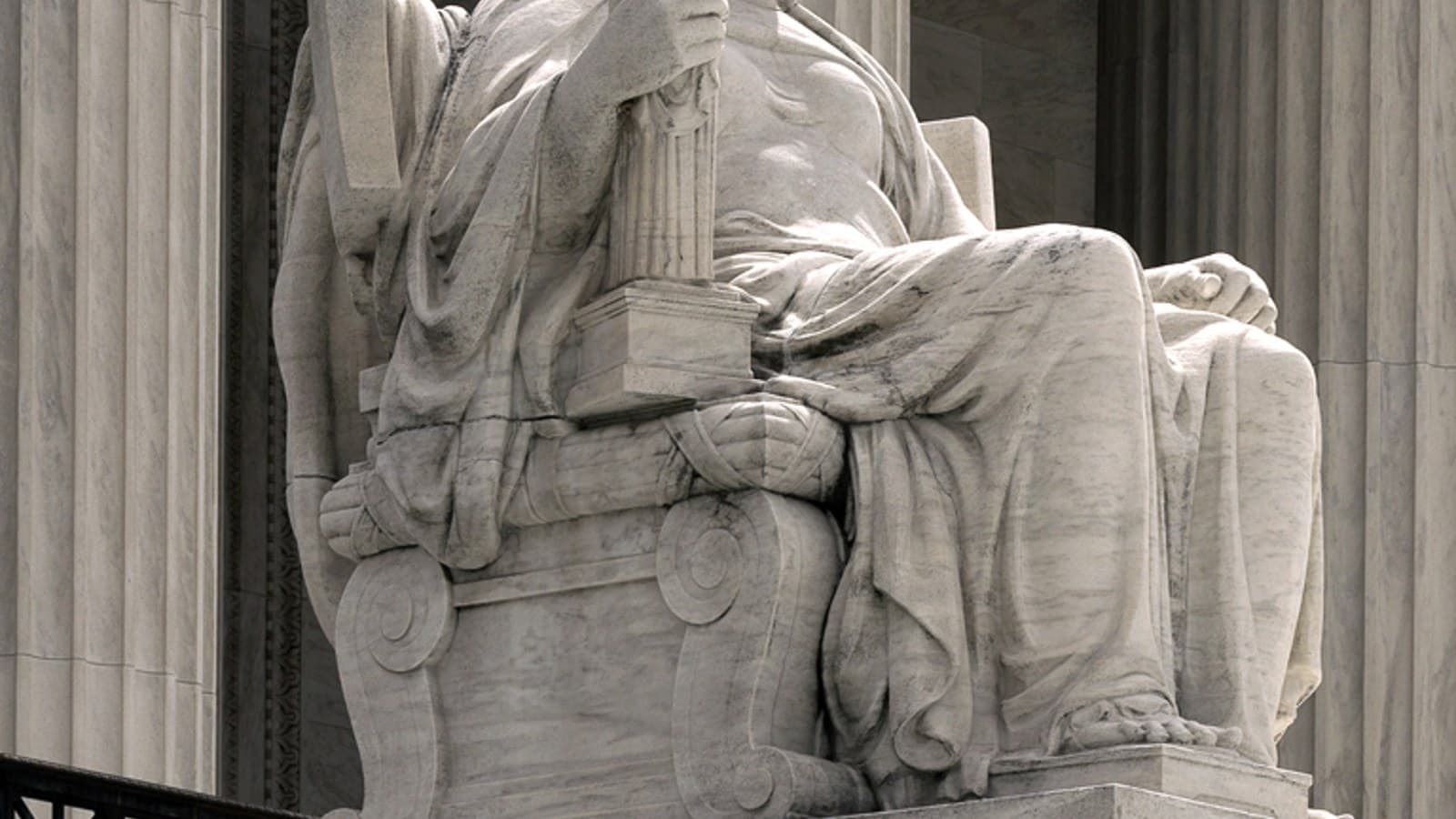
- Image: Contemplation of Justice, James Earle Fraser's statue on the Supreme Court Building's main steps (file photo). Photo: U.S. Capitol via Wikimedia Commons (public domain).
- Author: Ryan Standley / Record of Sale, LLC / Notice Nearby.
- Discussed on @NoticeNearYou: (pending — fill xPostUrl after live post).
- Not legal advice. Not a newspaper. Not Legal Publication. Record of Sale, LLC (Oregon).
Supreme Court desk · Notice Nearby public papers shelf. @NoticeNearYou post pending.
Not legal advice. Not a newspaper. Not Legal Publication. Record of Sale, LLC (Oregon).