Public paper · October 13, 2026 · Supreme Court desk
Blanche v. Ozurumba, No. 25-1343: The Supreme Court Takes the Government's Appeal in a Nigerian Cook's Asylum Case Over the Terrorism 'Material Support' Bar
On October 13, 2026 the Supreme Court granted the Attorney General's petition in Blanche v. Ozurumba. The Fourth Circuit had ruled that the record did not show that Izuchukwu Ozurumba, a Nigerian man who testified he was forced to cook for an armed group's leaders, provided material support to a terrorist organization. Here are the facts, the history and the terms, explained.
noticenearby.com/papers/scotus-case-blanche-v-ozurumba-25-1343.pdf
On October 13, 2026, the Supreme Court granted review in No. 25-1343, Todd Blanche, Attorney General v. Izuchukwu Ozurumba (Supreme Court Order List, Oct. 13, 2026, p. 3).
This paper uses only the Court's dockets, orders and the official filings and opinions named under Sources. Each fact is cited. Legal terms are explained in plain words at the bottom of the page.
Who the parties are
- Petitioner: Todd Blanche, Attorney General, represented by Solicitor General D. John Sauer (Supreme Court docket No. 25-1343).
- Respondent: Izuchukwu Ozurumba, represented by David Meir Zionts of Covington & Burling LLP (same docket).
- The Fourth Circuit opinion describes Ozurumba as "a 56-year-old native and citizen of Nigeria" (Ozurumba v. Bondi, No. 24-2070, 4th Cir. Sept. 2, 2025, slip op. 3).
What happened in the lower courts
- An immigration judge found that Ozurumba "provided material support to a terrorist organization when he was forced to prepare meals for its leaders" and denied asylum and withholding of removal. The Board of Immigration Appeals affirmed (4th Cir. slip op. 2).
- Ozurumba testified that he took a job as a cook in 2022, was driven to a rural camp with armed guards, cooked three meals a day for 15 to 17 "bosses," and that "[t]here was no way for [him] to leave." The immigration judge found his testimony "generally credible" (4th Cir. slip op. 3-4).
- On September 2, 2025, a divided Fourth Circuit panel granted his petition, vacated the Board's order and remanded. Judge Wynn wrote for the majority, joined by Judge Berner, and Judge Richardson dissented. The majority held that "the record does not support the conclusion that Ozurumba provided material support" (4th Cir. slip op. 1-2).
- Rehearing was denied on December 30, 2025. The Chief Justice twice extended the government's filing deadline, and the petition was filed May 29, 2026 (docket No. 25-1343).
The question the Court is deciding
The questions-presented page was not posted online when this paper was written. The docket says filings in this case are "in paper form only" (docket entry, Mar. 20, 2026). Notice Nearby will quote the question when the Court posts it.

Case timeline
- 2022: Ozurumba testifies he was taken to the camp (4th Cir. slip op. 3-4).
- May 7, 2025: Fourth Circuit argument.
- Sept. 2, 2025: Fourth Circuit rules for Ozurumba, 2-1.
- Dec. 30, 2025: Rehearing denied.
- May 29, 2026: Government files petition.
- Aug. 3, 2026: Ozurumba's brief in opposition.
- Aug. 18, 2026: Government reply.
- Oct. 13, 2026: Certiorari granted.
What's at stake (in the official documents' own words)
- The Fourth Circuit wrote that under U.S. immigration law, a noncitizen "is ineligible for asylum or withholding of removal if they have provided material support to a terrorist organization, even if they are otherwise eligible" (4th Cir. slip op. 2).
- The majority and the dissent disagreed over whether forced cooking for an armed group's leaders counts as "material support" under the statute (4th Cir. slip op. 2).
What happens next, and when
The Court will set briefing and an argument date. As of October 13, 2026, none is listed (docket No. 25-1343).
What these terms mean
- Certiorari (writ of certiorari) (say it: ser-shee-uh-RAIR-ee). Means: An order from the Supreme Court telling a lower court to send up the records of a case the Justices have agreed to hear. Origin and history: The Certiorari Act of 1925 gave the Supreme Court the choice of whether to hear most appeals. Today it agrees to hear about 100 to 150 of the more than 7,000 cases it is asked to review each year. Source: Meaning: uscourts.gov Glossary of Legal Terms, "Writ of certiorari." History: uscourts.gov, "About the Supreme Court" (Administrative Office of the U.S. Courts).
- Cert granted (say it: SURT GRAN-tid). Means: The Supreme Court has agreed to hear the case. It is not a ruling on who wins. Origin and history: "Cert" is short for certiorari. When a party asks the Court to review its case, it files a petition for a writ of certiorari. Source: uscourts.gov, "About the Supreme Court"; Supreme Court Order List, Oct. 13, 2026 ("The petitions for writs of certiorari are granted").
- Vacated and remanded (say it: VAY-kay-tid and ree-MAN-did). Means: "Vacated" means the lower court's judgment is canceled and no longer in force. "Remanded" means the case goes back to the lower court for further proceedings. Origin and history: A remand is the act of an appellate court sending a case back to a lower court for further proceedings. Source: uscourts.gov Glossary, "Remand"; Supreme Court Order List, Oct. 13, 2026 ("The judgment is vacated, and the case is remanded").
- Amicus curiae (say it: uh-MEE-kus KYOOR-ee-eye). Means: A brief filed by a person or group that is not a party to the case but has an interest in it, offering its own arguments. Origin and history: Latin for "friend of the court." Source: uscourts.gov Glossary, "Amicus curiae"; uscourts.gov, "Supreme Court Procedures."
- Docket (say it: DOK-it). Means: The court's running log of a case, with a short dated entry for every filing and order. Origin and history: Each Supreme Court case gets a docket number, such as No. 25-1103. Source: uscourts.gov Glossary of Legal Terms, "Docket."
Each term card has a short audio clip of the term spoken by Ryan Standley. The clip players appear when the term-card display goes live.
Read next
- U.S. DOGE Service v. U.S. District Court for D.C.
- Berry v. United States
- FCC v. Brown
- Beaird v. United States
- Salazar v. Paramount Global
- Howard v. Texas / In re Howard
- Roofing Designs v. Royal American
- Silva Ochoa v. United States
- Monsanto v. Dennis
- Hobson v. United States
- Order list, Oct. 13, 2026
- Chief Justice stays the Fourth Circuit in FCC v. Brown
- Arguments this week and the November calendar
- Howard stay denials, Oct. 7
Sources
- Supreme Court Order List, Oct. 13, 2026.
- Supreme Court docket No. 25-1343, read Oct. 13, 2026.
- Ozurumba v. Bondi, No. 24-2070 (4th Cir. Sept. 2, 2025) (published opinion), U.S. Court of Appeals for the Fourth Circuit.
Notes and sources
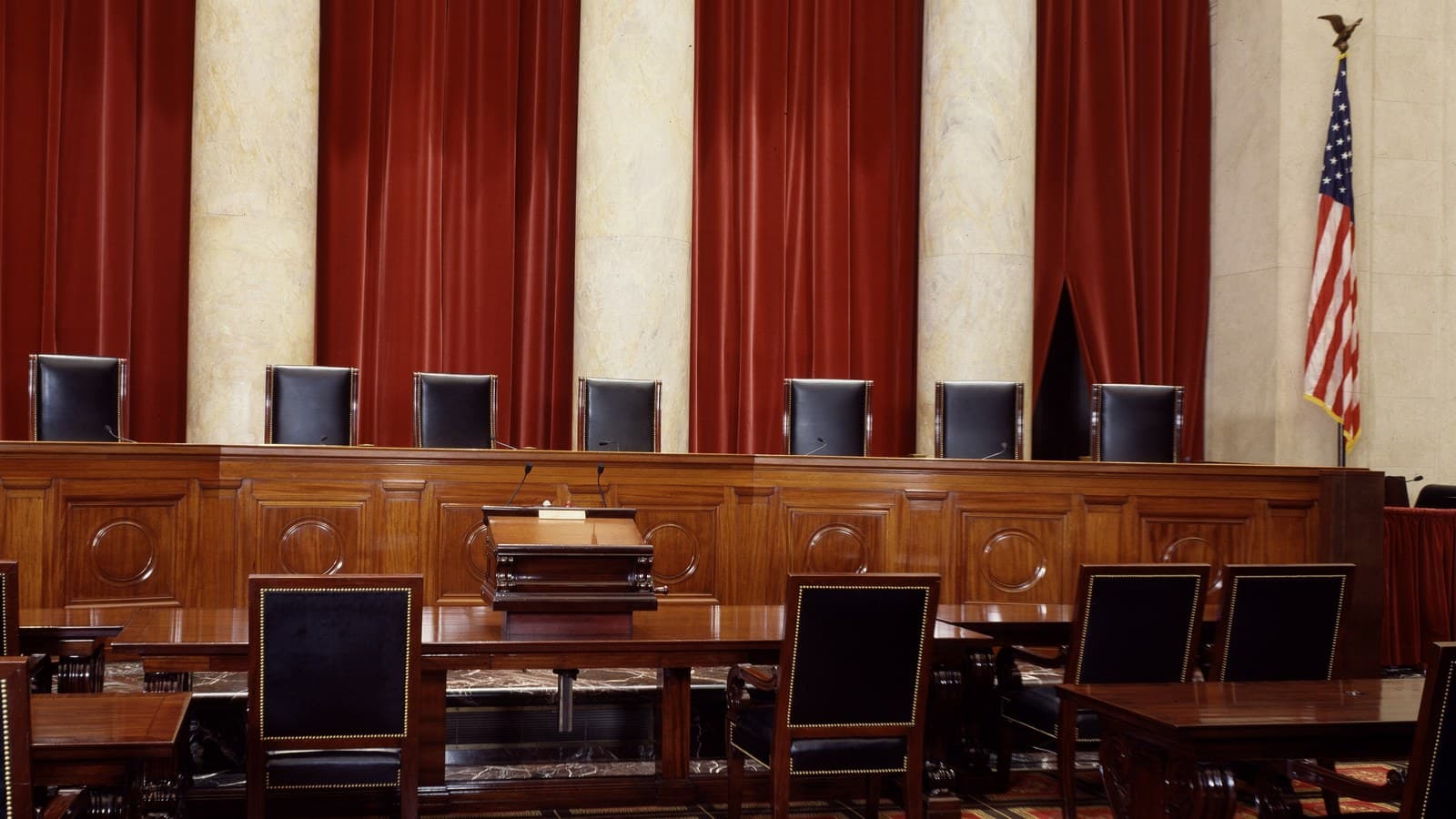
- Image: Chambers of the U.S. Supreme Court, Washington, D.C. (file photo). Photo: Carol M. Highsmith, Library of Congress (public domain).
- Author: Ryan Standley / Record of Sale, LLC / Notice Nearby.
- Discussed on @NoticeNearYou: (pending — fill xPostUrl after live post).
- Not legal advice. Not a newspaper. Not Legal Publication. Record of Sale, LLC (Oregon).
Supreme Court desk · Notice Nearby public papers shelf. @NoticeNearYou post pending.
Not legal advice. Not a newspaper. Not Legal Publication. Record of Sale, LLC (Oregon).